
 By
By 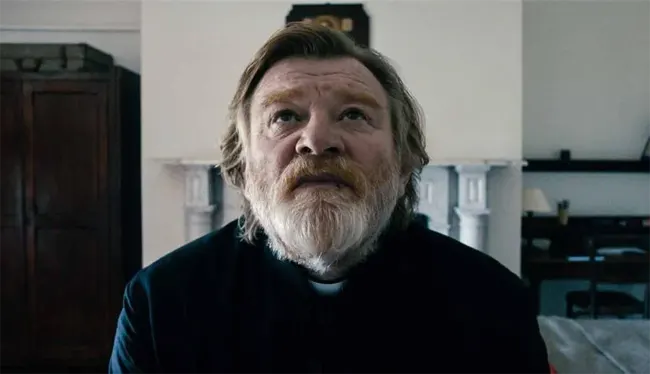
Movies have looked at religion in many different ways. Often, the theme is used as a way to dramatise the complexities of faith, how we choose to believe or not in the existence of a god, and how it informs and guides human relationships.
Curiously, one of the greatest pro-religion films ever made is William Friedkin’s horror masterpiece, The Exorcist. It is a film that celebrates the existence of god by presenting a conflict between good and evil. Through a troubled priest’s re-evaluation of his faith, he is able to save the life of a young girl by accepting his belief in god.
There are numerous examples of pro-religious movies. Indeed, the National Catholic Register lists its top 100. The Sound of Music, It’s A Wonderful Life, and Sister Act are all included. Mel Gibson’s The Passion of the Christ tops the list.
But what about the films that question and criticise the role of faith in our lives, the validity of religion, and how it can create rather than solve conflict?
Anti-faith: A dim view of religion in movies
We take a look at those movies that present a negative view of religion. In films such as Women Talking, Calvary and All My Puny Sorrows we witness how faith can break families apart and cause disharmony within communities.
In other examples such as Catch Me Daddy, Apostasy and Boy Erased we see how religion saps free will, taking away people’s liberty, individuality and freedom of expression. Elsewhere, in films like Spotlight, the church becomes a smokescreen for sinister intentions and criminal acts.
Are You There God? It’s Me, Margaret
Dir. Kelly Fremon Craig (2023)
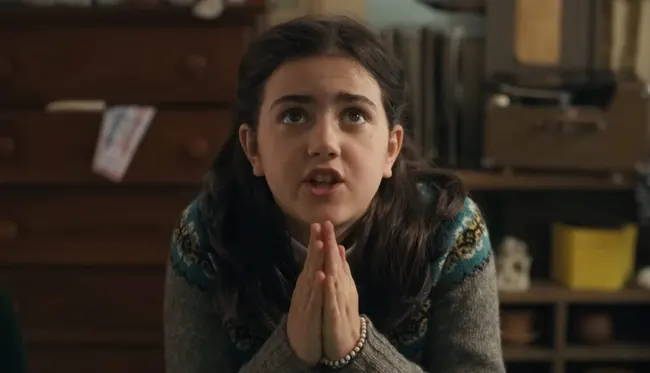
In Are You There God? It’s Me, Margaret, the parents of the 11-year-old title character decide not to prescribe a religion upon their daughter. That’s in part because they’re not devotees of their faith like their own parents. It’s also to avoid confusion as Margaret’s mother is Christian and her father is Jewish.
The film, which is based on a novel by Judy Blume released in 1970, is like the book, aimed at teenagers. As such it keeps the intricacies of religious principles to a minimum, and allows the fact Margaret’s parents’ faiths differ to play out subtly in the background. Satisfyingly, director Kelly Fremon Craig avoids any preaching and steers the story of a teenager’s 11th year away from melodrama.
That’s accomplished partly through a breakout performance by Abby Ryder Fortson. Her Margaret is a charming young woman going through the familiar challenges of adolescence. Making friends at a new school; stressing about body shapes, boobs and periods; falling in love. All the while grappling with her own belief in god which plays out through her private, one way conversations with a potential deity.
While Are You There God? It’s Me, Margaret may end up leaning towards the benefits of faith, it does example the unnecessary obstacles that can tear families apart. For example, the 11-year-old hasn’t met her grandparents on her mother’s side because they refuse to acknowledge a union between a Christian and a Jew.
At one point, after a family dinner becomes a slagging match over the religious debate, Margaret suddenly shouts: “Stop it!”. The arguing ceases and the room falls silent. “All of you just stop it. I don’t care. It’s so stupid… religion. Just stop fighting. I don’t want a religion.” She walks off but before walking up the stairs she turns and says, perhaps insincerely, “I don’t even believe in god.”
Spotlight
Dir. Tom McCarthy (2015)

Spotlight focuses on a team of investigative journalists from The Boston Globe who unearth evidence of systemic child sex abuse by priests of the Catholic Church. Loosely inspired by a series of stories published by the Spotlight team which earned the newspaper the 2003 Pulitzer Prize for Public Service, the film is a taut, tense drama with excellent performances from Michael Keaton, Rachel McAdams and Mark Ruffalo.
It builds its thrills through the journalists’ attempts to get through red tape and legal hurdles. They must alleviate witness fears to record testimony, and overcome the widespread, powerful church influence that’s built a wall of silence to hide its more sordid past and, evidently, its equally shameful present, in order to publish a damning report into institutional crime.
Women Talking
Dir. Sarah Polley (2022)
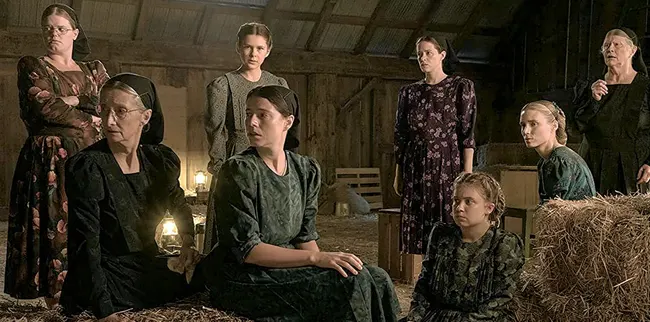
Based on the true story of a remote Mennonite group in Bolivia, writer-director Sarah Polley transfers the tragic reality of wholesale rape of women and young girls to a community somewhere in North America.
Following the fortunate identification of a single culprit leading to the perpetrator naming the other men involved and charges being brought, the religious enclave’s elder males set off to the city to post bail for those responsible.
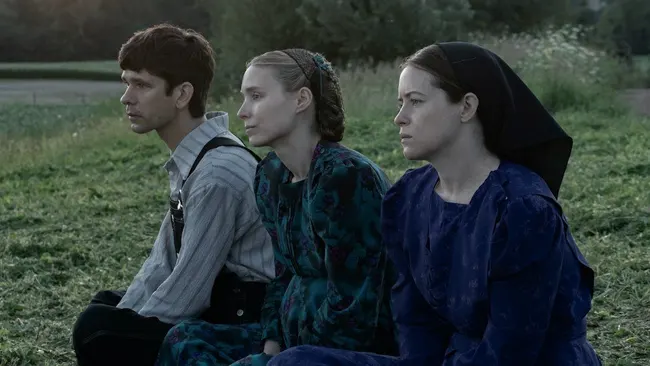
Left alone, some of the women and teenage girls gather in a barn to discuss how they should respond. As they were never taught to read or write, they ask amiable school teacher August (Ben Wishaw) to write down the pros and cons of their options: do nothing, stay and fight, or leave.
An excommunicated former member of the community, August has been allowed to return to teach the boys. While trying to remain impartial, he is obviously sensitive to the women’s concerns, understanding the challenges they face regardless of the decision they make.
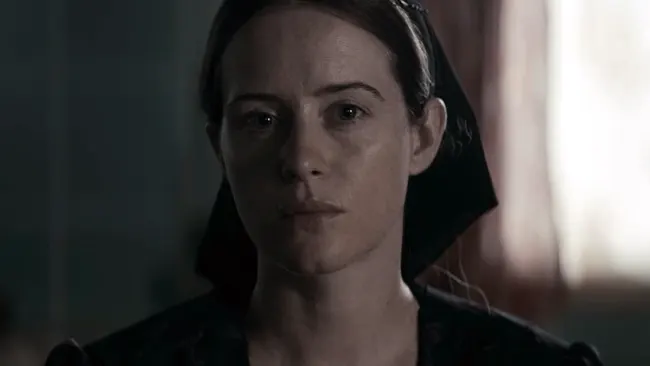
Based on the book by All My Puny Sorrow’s novelist Miriam Toews, Women Talking presents a potent indictment of patriarchal authoritarianism and religious subjugation.
It’s ensemble cast, led by Rooney Mara, Claire Foy and Jessie Buckley, is outstanding, while Polley’s tightly constructed screenplay proudly gives women the stage in recalling the pressure cooker diplomacy of Sidney Lumet’s classic courtroom drama 12 Angry Men.
The Boondock Saints
Dir. Troy Duffy (1999)
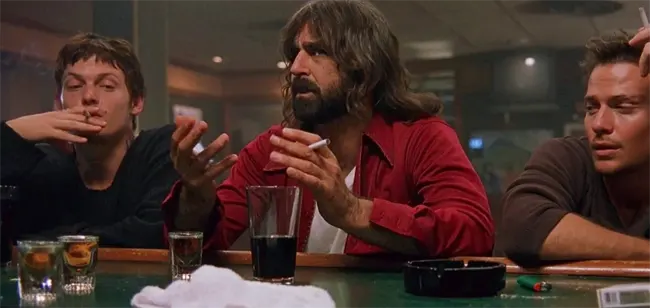
Inspired by a sermon from the priest of their Catholic Church, two brothers become vigilantes to rid Boston of its Russian gangsters. While the pair’s rough justice offers the cathartic thrill of seeing society’s evildoers getting their comeuppance, the titular “Saints” are still operating outside the law.
Troy Duffy’s film really only uses religion as a jumping off point into Murphy and Connor MacManus’ bloody carnage but it’s interesting to see it used as a form of justification for their actions. The prayer they recite before disposing of each of their victims is a reflection of their devotion to the church. And reconfirms its role in their belief that they’re right to step outside the law.
Calvary
Dir. John Michael McDonagh
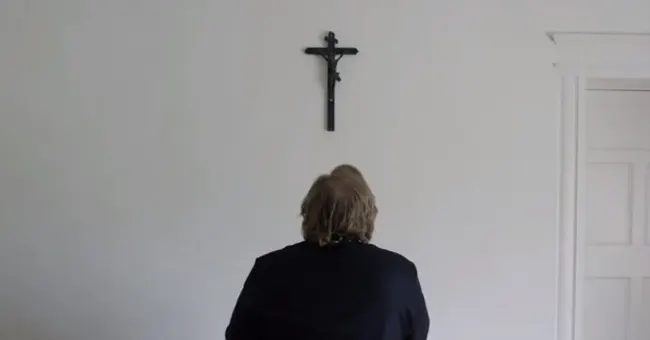
Father James (Brendan Gleeson) takes confessional and is told by an unseen male voice that the man suffered child sex abuse at the hands of a now deceased priest. Believing that the only form of justice is to bring attention to the church by killing a completely innocent member of the clergy, the male voice explains that he will murder Father James in one week.
Writer-director John Michael McDonagh, who made The Guard with Gleeson three years prior to releasing Calvary, re-teams with the actor for this troubling take on historical crimes and the role of the Catholic church in the lives of a group of Irish parishioners. Each lean on the church in different ways, and a beleaguered Father James attempts to continue his duties while considering his response to his would-be killer’s threats.
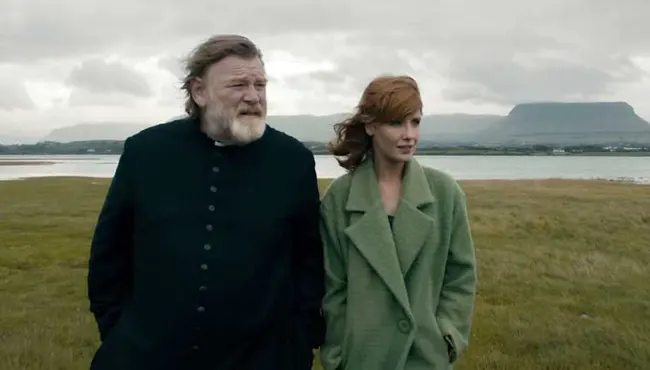
Gleeson is superb, his own tortured past writ large on the weathered face of a man who has witnessed both joy and sorrow, directly and indirectly through his parishioners.
When his daughter arrives from London having tried and failed to commit suicide, he must face the consequences of a past he has used the church to distance himself from, reconnecting with a woman who needs her paternal father. Meanwhile, the possibility of his impending death looms on the horizon.
All My Puny Sorrows
Dir. Michael McGowan (2021)

A bleak but heartfelt and poignant film, All My Puny Sorrows’ focus on family tragedy and mental illness is set against the background of the Mennonite faith and its restrictive doctrine on the lives of two sisters.
In present day, we witness Alison Pill’s Yolandi and sibling Elfrieda (Sarah Gadon) living with the scars of their father’s suicide, which happened in their childhood, having released themselves from the constraints of their former church.
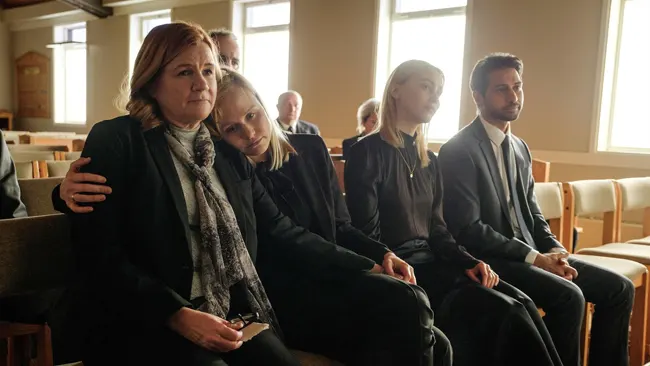
But when Elfrieda tries and fails to commit suicide, and is committed to an institution for 24-hour care, the sisters are forced to face the demons that still trouble them, and how religion has both framed and subverted the course of their lives.
Based on the book of the same name by Miriam Toews which was inspired by her own experiences, the film is blessed with two striking performances from its female leads – Pill and Gadon.
Boy Erased
Dir. Joel Edgerton (2018)
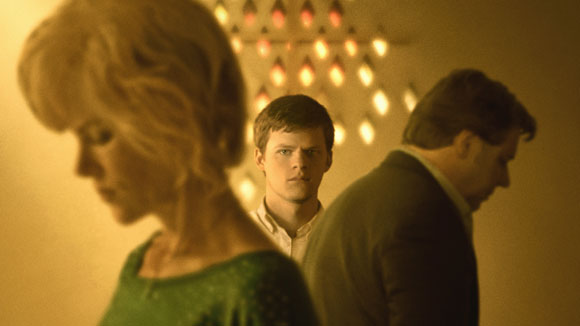
Based on Garrard Conley’s memoir of the same name, Boy Erased follows a young man’s experiences through a gay-conversion programme in Memphis, Tennessee. Enrolled by his Baptist preacher father in Love In Action in order to “fix” his sexuality, Jared Eamons (Lucas Hedges) joins a number of other men and women from fundamentalist families deemed behaviourally misguided and suitable for “treatment”.
Joel Edgerton, who, as well as producing and directing the film, writes and stars in it, presents a damning document of a fire and brimstone Christian practice to alter a person’s sexual preference. Inspired by the programme founded by Frank Worthen, John Evans, and Kent Philpott in 1973, through Jared’s enrolment we see its chilling predilection for presenting someone’s homosexuality as a moral wrong.
Through psychological manipulation and exercises extracted from actual mental health treatment techniques, programme attendees are not only made to feel guilt and self-pity but are taught to point a finger at parental neglect and thus develop an unnecessary hatred for others that might not have existed before. It’s all in the name of god; ultimately avoiding being a minion of Satan in hell.
Apostasy
Dir. Daniel Kokotajlo (2017)
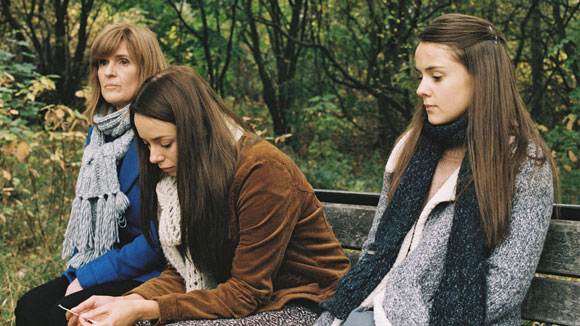
Writer-director Daniel Kokotajlo based the film on his own experiences as a Jehovah’s Witness. Memories that – at least as far as Apostasy is concerned – are far from fond. The film, which takes its title from a word meaning the abandonment or renunciation of a religious belief, isn’t prepared to sit on the fence. Without the placard-waving profanity of the infamous Westboro Baptist Church, it’s convenient to dismiss Kokotajlo’s congregation as benign. But it’s anything but.
Siobhan Finneran is Ivanna, the matriarch of a devout Jehovah’s Witness family. Her grown-up daughters have been indoctrinated into their mother’s belief system and follow it to the letter. But Alex (Molly Wright), who recently turned 18, possesses guilt for having a life-saving blood transfusion as a baby (a sin in the eyes of her elders) while twenty-something Luisa (Sacha Parkinson) is increasingly concerned about the constrains of her faith on the conventional normalities of modern life.
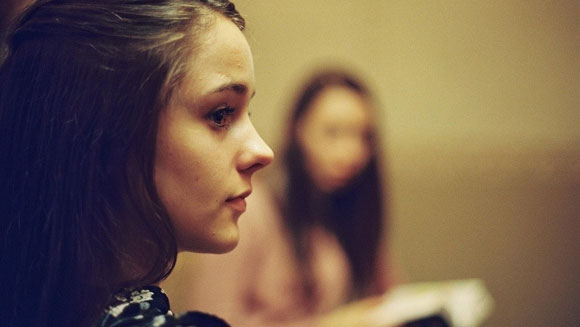
Interestingly, while Apostasy is an ultimately damning critique of religious servitude and the irrefutable principles of biblical scripture, it shrewdly leaves all its preaching to the elder at the lectern.
Catch Me Daddy
Dir. Daniel Wolfe (2014)

Laila (Sameena Jabeen Ahmed), a rebellious British-Asian girl on the run from her father who disapproves of her relationship with Scottish “lad” Aaron (Connor McCarron), is holed-up in a caravan somewhere outside the city. The couple are living off a crisis loan and Laila’s cash-in-hand job at the local salon. But that’s not the worst of their worries.
Her furious father, who feels Laila has brought shame on their Muslim family, has learned of her whereabouts and commissioned a couple of local thugs to track her down (Gary Lewis and Barry Nunney). He’s also sent his psychotic brother and three other family members along to ensure everything goes to plan.
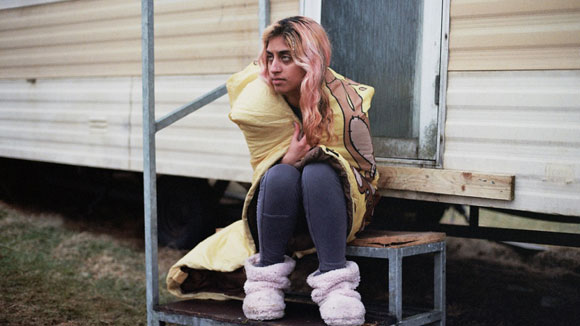
As much as Catch Me Daddy’s slow-burning drama is underpinned by its unforgiving atmosphere, the plot gains momentum thanks to the ambiguity surrounding Laila’s potential fate. We are initially unaware of the antagonists’ motives – is it money, family honour, the thrill of the chase. But their prey – a confused, desperate young girl with no one in the world to turn to has surely little chance of escape. The chase therefore has an unsettling sense of the inevitable.
Carrie
Dir. Brian De Palma (1976)

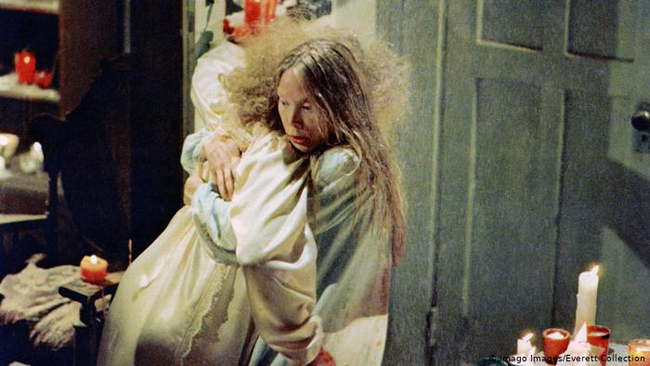
Meet Piper Laurie’s Margaret White. A devout Christian, she sees her daughter’s telekinetic powers as evil. I referred to her as a “monster in a nightgown” in my list of Frightening Female Characters.
Laurie is callous in her grotesque yet icily controlled god-fearing ways. Her small role is one of a number of great things about Brian De Palma’s adaptation of the Stephen King novel.
The novelist who created the character of White is not averse to portraying Christianity in a dim light through his work. That said, the author has revealed he does believe in god.
In an interview in Rolling Stone promoting his novel Revival in 2014, he described religion as “a very dangerous tool that’s been misused by a lot of people”. Revival actually sees a Methodist minister condemning his own faith after a horrific accident.
If you enjoyed our look at anti-religion movies, you may also like:
Grabbing The Headlines: 32 Great Movies About Journalists

The best movies about journalism including All the President’s Men, The Girl with the Dragon Tattoo, The Front Page, Spotlight, and The Post.








Comments