
 By
By Teachers in film have taken on many guises. A familiar trope is the idealistic mentor who turns the fortunes of their apathetic students around, putting potentially lost lives on the right track and nurturing undiscovered talent so that it can flourish.
But not all films about teachers in school or university default to the inspirational classroom saviour motif. There’s the drug-addicted middle schoolteacher of Half Nelson, the popular but bitter civics teacher in Election who wilfully tries to sabotage a student’s success, and the cutthroat bully seen in Whiplash.
And while optimism is ultimately a popular end goal (as witnessed in countless movies set in educational institutions from Lean on Me and Stand and Deliver to Finding Forrester and Freedom Writers) it is often distinguished by some interesting plot devices (the British-Guyanese teacher overcoming systemic challenges in To Sir, With Love, and the music teacher going to war with violent gangs in Class of 1984).
Then there’s the high concept entertainment of films like Kindergarten Cop in which Arnold Schwarzenegger goes undercover as a teacher to pint-sized five-year-old kids, and School of Rock where a musician (Jack Black) uses his burning desire to start a successful band – and fake teaching credentials – to enlist a bunch of prep school kids in a new rock group.
There are also films that see their teacher characters do no teaching at all. Perhaps that should automatically remove them from consideration but then that would mean leaving off Brian Stimpson (John Cleese) and his mishap laden cross-country trip in the brilliantly funny Clockwise, and the inimitable Indiana Jones.
Here I check out a bunch of my favourite teachers in film featuring characters that sometimes acquiesce to typical narrative tropes and at other times try to subvert them.
Grady Tripp
Michael Douglas – Wonder Boys

Grady Tripp (Michael Douglas) in Wonder Boys, is a refreshingly unconventional screen teacher. Far from the inspirational mentor archetype, Grady is deeply flawed. He’s cynical, distracted, and reeling from his own failures. A once-promising novelist now drowning in a 2,500-page manuscript with no end in sight, he lumbers through academic life high, hungover, and heartbreakingly honest.

Yet that’s what makes him so compelling: unlike most cinematic educators, he’s not here to transform his students’ lives, but in stumbling through his own unravelling, he becomes unexpectedly instructive. Through his chaotic weekend, Grady doesn’t deliver tidy life lessons, but rather shows what it means to confront stagnation, accept imperfection, and finally choose to move forward.

His interactions with students, particularly the emotionally troubled James Leer and the quietly perceptive Hannah Green, are filled with uneasy tension, mutual projection, and the occasional flicker of care. Grady is no role model, but his willingness to engage, however messily, with his students’ lives, reflects the murky boundaries of real mentorship. He doesn’t save James, or even fully understand him, but by showing reluctant compassion and eventually owning up to his own mistakes, Grady manages to salvage something authentic from his failures.
His eventual act of finishing a new novel, one based on the chaotic events he’s just endured, isn’t triumphal but redemptive. He becomes, finally, a teacher who leads by example: not through academic brilliance, but by having the courage to rewrite the ending of his own story.
Terence Fletcher
J.K. Simmons – Whiplash

J.K. Simmons’ terrifying intensity as Terence Fletcher in Whiplash makes him one of cinema’s most chilling and unforgettable teachers, not because of what he teaches, but how. A jazz instructor at the prestigious Shaffer Conservatory, Fletcher believes greatness can only be forged through pain, pressure, and psychological warfare.
His method is less mentorship and more mental conditioning: he insults, humiliates, and physically intimidates his students, all under the guise of pushing them toward genius. His weapon of choice isn’t encouragement, it’s fear. Simmons’ performance radiates controlled fury, making Fletcher as magnetic as he is monstrous. His belief that “there are no two words more harmful than ‘good job’” becomes the twisted gospel that drives his pursuit of perfection.

Fletcher is compelling not because of his cruelty, but the unsettling moral ambiguity beneath it. He’s not simply a villain, he’s a provocateur who genuinely believes his torment serves a higher artistic purpose. In Andrew Neiman, Fletcher sees raw talent, and rather than nurture it, he hammers it like steel on an anvil, determined to create the next Charlie Parker, even if it destroys the person in the process.
Whiplash forces viewers to wrestle with uncomfortable questions: Is greatness worth suffering for? Can abuse ever be justified in the name of excellence? In the film’s electrifying final sequence, when Fletcher and Andrew lock into a shared moment of brilliance, it’s unclear whether we’re witnessing triumph or tragedy, or both. Fletcher doesn’t just test his students’ limits. He tests the audience’s, too.
John Kimble
Arnold Schwarzenegger – Kindergarten Cop
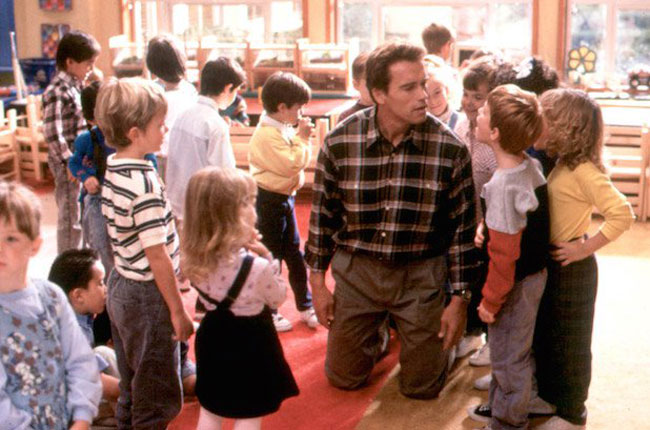
Arnold Schwarzenegger’s John Kimble in Kindergarten Cop is a classic case of fish-out-of-water brilliance, combining the actor’s action-hero bravado with unexpected tenderness. A gruff LAPD detective used to shouting down criminals, Kimble is suddenly thrust into the chaos of a kindergarten classroom, where tantrums, finger painting, and toilet breaks replace gunfights and stakeouts.
What starts as an undercover job to find a wanted criminal’s ex-wife and child turns into something far more personal. Initially overwhelmed, Kimble’s no-nonsense approach and tough-love discipline slowly begin to earn him the respect of the kids, their parents, and even the stern school principal. Through police drills and circle time, he discovers a new kind of challenge, and an unexpected sense of purpose.
Dan Dunne
Ryan Gosling – Half Nelson

Ryan Gosling’s Dan Dunne in Half Nelson is one of the most layered and human portrayals of a teacher ever put to screen. On the surface, Dan is charismatic and intellectually engaged, an inspiring history teacher who challenges his students with dialectics and ideas far beyond the standard syllabus.
But outside the classroom, he’s crumbling. A functioning addict, Dan’s life is a blur of late-night drug use and emotional detachment, masking a deep well of loneliness and unprocessed pain. His dual existence collapses when his student Drey catches him using drugs, setting the stage for a quietly devastating exploration of fractured adults and kids forced to grow up too soon.
Dewey Finn
Jack Black – School Of Rock

Jack Black’s Dewey Finn in feelgood hit 2000s comedy School of Rock is one of cinema’s most delightfully unconventional teachers, a man who stumbles into the classroom by accident and transforms it into a stage for self-expression and growth.
A failed rocker impersonating his flatmate to pay rent, Dewey’s journey from slacker to surrogate mentor is both hilarious and unexpectedly touching. Initially treating the elite prep school as a joke, he finds purpose when he discovers his students’ musical potential.
In place of textbooks and timetables, Dewey brings riffs and rebellion, igniting a passion in the kids that their formal education never touched. His free-spirited chaos challenges their uptight surroundings, but it also gives the students something they didn’t know they needed: confidence, creativity, and a sense of identity.
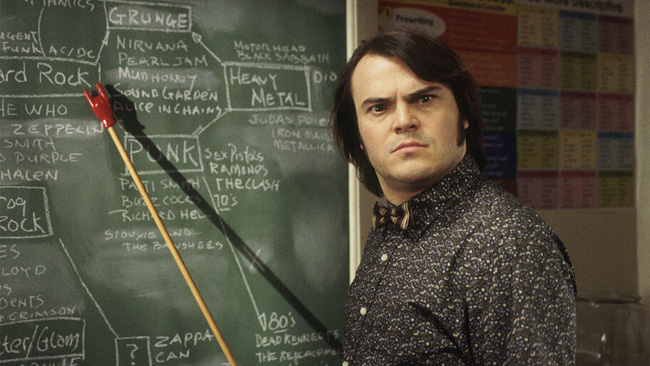
Behind Dewey’s scruffy exterior lies a genuine understanding of how art can heal, connect, and empower. He nurtures the shy, encourages the overlooked, and teaches his class not just how to play music, but how to “stick it to the man”, to speak up, break free from pressure, and be unapologetically themselves.
Even when his deception is uncovered, the bond he’s formed with the kids proves unshakable. Their triumphant performance at the Battle of the Bands becomes a celebration of everything they’ve learned – about music, about life, and about their own worth.
Mark Thackeray
Sidney Poitier – To Sir, With Love
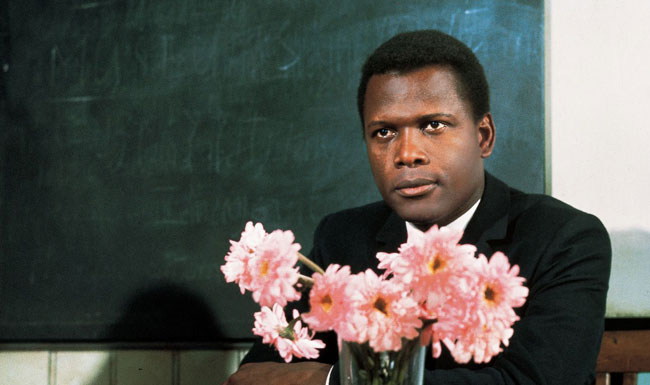
Mark Thackeray (Sidney Poitier) in To Sir, With Love is a quietly revolutionary figure in the canon of cinematic teachers. An engineer by training and an outsider in every sense – black, foreign, and overqualified – he accepts a job at a crumbling East End school as a stopgap. What he finds is not just academic underperformance but social despair: a classroom filled with disenfranchised, disaffected teenagers who treat adults with contempt. But rather than mirror their aggression or retreat in defeat, Thackeray chooses a bold approach: he treats his students as adults and demands that they do the same in return. With empathy, consistency, and grace, he chips away at their defences, offering not punishment or pity, but respect.
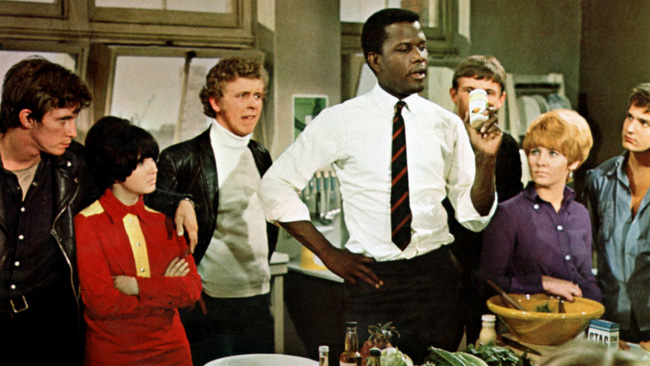
There are no grand speeches or dramatic gestures. Rather Thackeray displays a quiet resilience in the face of apathy, racism, and hostility. He listens. He adapts. And through his patience, he fosters real change, encouraging students to embrace self-respect and take ownership of their lives. Unlike other “inspirational teacher” narratives, Thackeray’s triumph isn’t about academic excellence or miraculous transformations; it’s about human connection and the long game of social uplift.
His decision to tear up the engineering job offer and remain at the school – after being gifted a silver tankard engraved “To Sir, with Love” – is profoundly moving, not just because he chooses to stay, but because he finally sees hope where there once was only resistance. In choosing his students over personal advancement, Thackeray becomes the very embodiment of purpose-driven education.
Andrew Norris
Perry King – Class Of 1984

Andrew Norris (Perry King) in Class of 1984, is a teacher driven by purpose, optimism, and eventually, a desperate sense of justice. Arriving at Lincoln High School with the noble goal of inspiring troubled youth through music, Norris quickly finds himself in a nightmare. The school is less an institution of learning than a war zone, ruled by gang violence, apathy, and fear.
Despite the metal detectors, armed teachers, and a hopeless administration, Norris refuses to abandon his ideals. He believes that structure, discipline, and beauty – delivered through a school orchestra – can offer students a path out. But the more he tries to build something positive, the more the system and its predators try to break him.
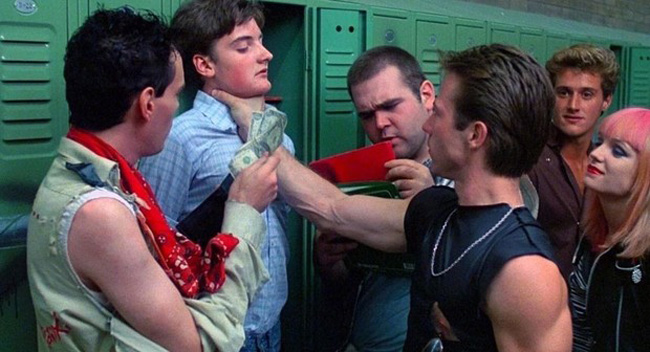
Norris’ enemy is not only the sociopathic student Peter Stegman and his gang, but the indifference of authority figures who allow violence to go unchecked. When Stegman escalates his attacks from classroom disruption to life-ruining brutality, Norris is forced to cross a line. His transformation from impassioned educator to vengeful protector is tragic, but grounded in righteous fury.
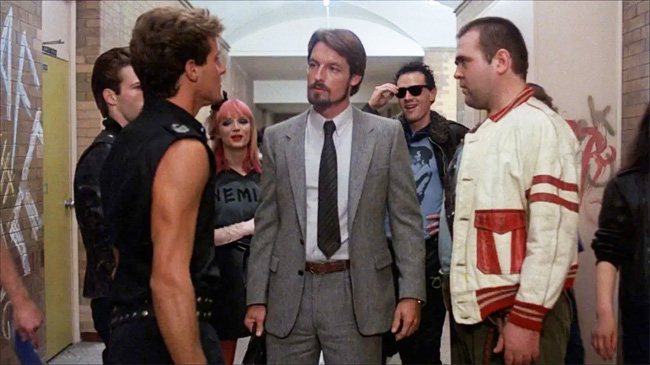
We watch a man’s hope erode with every failed appeal to justice, until all that’s left is survival and revenge. Yet even in his darkest moments, Norris is not a cartoon vigilante, he’s a man who wanted to teach music and ended up fighting a war. That contradiction makes him unforgettable: a teacher who tried to save his students, and in the end, had to destroy the monsters among them.
Brian Stimpson
John Cleese – Clockwise

Brian Stimpson, played to neurotic perfection by John Cleese in Clockwise, is one of British cinema’s most hilariously uptight schoolteachers, a man whose life has become a rigid timetable. Once carefree, Stimpson has transformed into a headmaster obsessed with order, precision, and moral rectitude. His school runs like a military operation, and being elected to chair the annual Headmasters’ Conference is his crowning achievement, especially as the first comprehensive school head to do so.
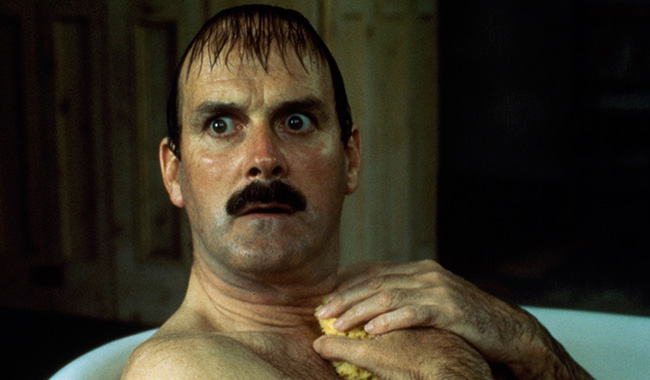
But Clockwise is a comedy of escalating disasters, and as Stimpson’s carefully plotted journey to Norwich spirals into chaos, the character becomes increasingly unhinged, exposing the absurdity of his obsession with control. Every mishap chips away at his authority, and Cleese’s performance brilliantly captures the comic fragility of a man watching his identity unravel in real time.

What makes Stimpson so compelling is how recognisably human his meltdown becomes. While his misadventures – misread directions, mistaken identities, stolen cars, and improvised speeches – are heightened to farcical levels, his desperation is rooted in a fear many can relate to: the terror of losing control.
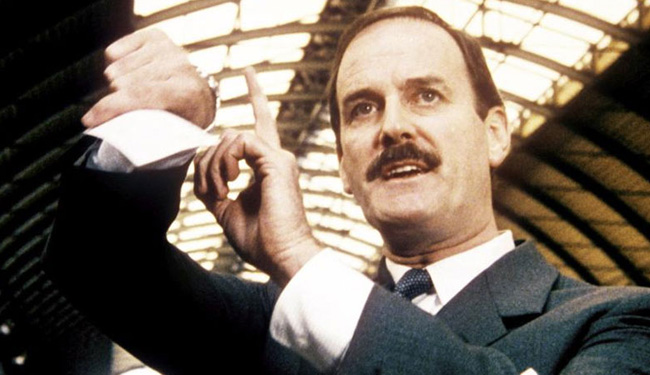
His increasingly ridiculous attempts to maintain dignity while everything collapses around him reflect a universal struggle to mask panic with professionalism. Yet even as he’s pursued by police and abandoned by reason, Stimpson clings to his role as headmaster, barking orders to everyone from students to strangers to police officers. He’s a tragicomic figure whose downfall is self-inflicted yet oddly admirable because no matter how farcical things get, he refuses to quit. He may be utterly defeated by the end, but never, ever late.
John Keating
Robin Williams – Dead Poet’s Society

Robin Williams’ John Keating in Dead Poets Society teaches far more than literature, he teaches the value of living. In the stifling, tradition-bound halls of Welton Academy, his free-spirited and provocative style makes him a lightning rod for both inspiration and controversy. Keating doesn’t lecture from the front of the classroom; he leaps onto desks, quotes Whitman with urgency, and implores his students to think for themselves. “Carpe diem,” he urges, not just as a poetic idea, but as a call to arms against complacency. He challenges his pupils to rip up rulebooks, reject conformity, and realise that words – and lives – have power when they come from the soul, not a syllabus.
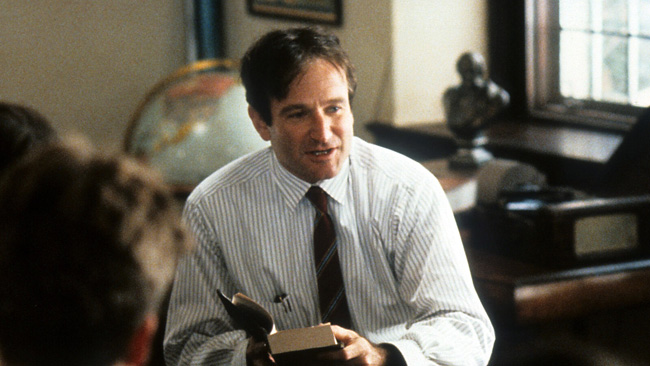
Keating’s rebellion is quiet but profound. He’s not trying to spark chaos, but to awaken something deeply personal in each student, be it Todd’s buried creativity, Neil’s love for acting, or Knox’s romantic courage. He fosters a space where vulnerability is strength, and where self-expression is more valuable than blind obedience.
And yet, his greatest lesson comes not in triumph, but in tragedy. When Neil takes his own life, Keating becomes the scapegoat for challenging the status quo. Still, the impact he leaves is indelible. In that final, soaring act of defiance, Todd and the others standing on their desks to salute him, we see just how deeply Keating’s teachings have taken root. He may be dismissed from the school, but in the hearts of his students, his voice endures.
Indiana Jones
Harrison Ford – Raiders of the Lost Ark, Indiana Jones and the Temple of Doom et al

As university professor Dr. Henry “Indiana” Jones Jr., Harrison Ford crafts a character who is equal parts scholar and swashbuckler, redefining what a cinematic teacher can be. In the lecture hall, he’s reserved, even aloof – surrounded by besotted students but more concerned with artefacts than affection. But once he trades his glasses for a fedora, Indy transforms into the ultimate action hero, traversing the globe, dodging ancient traps, outwitting Nazis, and unearthing mystical relics. His classroom extends far beyond ivy-covered walls. History, for him, isn’t abstract, it’s alive, dangerous, and constantly in need of protection from exploitation.
Indiana Jones lives the material he teaches, often risking his life for the sake of historical preservation and truth. Unlike more conventional educators, Indy doesn’t preach about the past, he fights to keep it from being erased or misused. While he might not foster emotional breakthroughs in students or nurture classroom rebels, his legacy is thrillingly clear: learning is not passive. For Indiana Jones, education is an adventure worth dying for.
From mentors to misfits, cinema’s teachers inspire, disrupt, and defy expectation
Film stories about teachers are compelling because they tap into a universal experience. Everyone has been shaped, for better or worse, by someone in a classroom. Teachers in cinema become avatars of authority, rebellion, compassion, failure, and sometimes danger, making them endlessly adaptable to the genre they inhabit.
From the passionate mentors who light a fire in apathetic students (Dead Poets Society, To Sir, With Love), to chaotic anti-heroes like Dewey Finn or broken figures like Dan Dunne, these characters let us explore the tension between personal transformation and institutional conformity. Audiences are drawn to teacher characters because they often straddle public responsibility and private messiness, making them ripe for drama, comedy, or tragedy.
“Teacher” is a role, not a personality. Over the years films have taken full advantage of that. Sometimes the drama treats education as a noble calling and structures stories around inspiration and uplift. Others flip the script, depicting teachers who are addicts (Half Nelson), manipulators (Election), or tyrants (Whiplash), using the classroom as a stage for obsession, vengeance, or collapse.
Then there are films that play with the idea of teaching altogether, through undercover antics (Kindergarten Cop), musical subversion (School of Rock), or action-packed archaeology (Indiana Jones). Whether grounded in realism or heightened by genre, cinematic teachers serve as vessels for exploring power, purpose, identity, and the very human desire to influence and be influenced.
Discover More
The High School Revolution: 10 Great Teenage Rebellion Films

Teenagers rebel. It is in their nature. This has been the basis for many great films about teenage life from Coppola’s The Outsiders to Corman’s Rock n Roll High School to Lehmann’s Heathers.













Great article Dan. I foolishly completely forgot or didn’t think of even putting Indiana Jones on his list but of course he is a college professor first and foremost.
I knew Dead poets society would make a list that’s a great choice as well.
I love that you have John Kimble in here what a great addition to the list.
If I could just add one name to the list it would be Ray Walstons interpretation of mr. Hand, Jeff spicoli’s teacher in Fast Times at Ridgemont high.