
 By
By 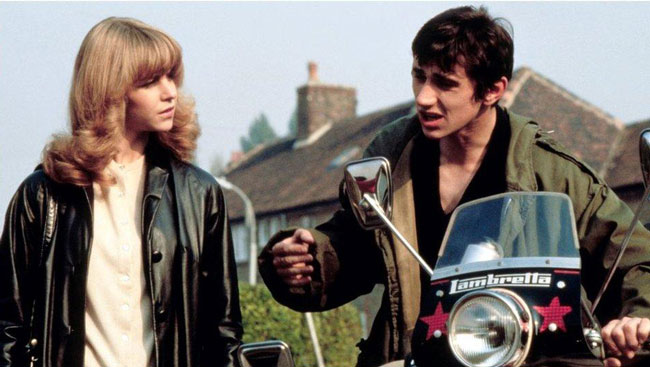
Released in 1979, Franc Roddam’s feature debut Quadrophenia took the concept of The Who’s 1973 rock opera and stripped away the theatricality of the musical genre. Unlike its predecessor Tommy, there were no glittery cameos or synchronised song-and-dance numbers. Instead, audiences were met with a gritty, rain-soaked exploration of 1964 London; a world of pill-popping, post-room blues, and the tribal warfare between Mods and Rockers.
Decades later, the film remains a touchstone for British youth culture and a pivotal moment in the careers of actors Phil Daniels, who embodied the restless Jimmy Cooper, and Leslie Ash, who played the cool, unattainable Steph. Speaking to The Guardian in 2019, they recount the chaos, the danger, and, indeed, the depravity, that defined the making of a masterpiece.
“He encouraged the depraved side of our nature”
The journey to becoming Jimmy Cooper didn’t start with a polished performance for Daniels; it started with a fever. Having just returned from filming Zulu Dawn in South Africa, Daniels was physically reeling.
“I wasn’t well when I went for the auditions at Shepperton Studios,” Daniels recalls. “I’d got some sort of disease. I looked washed out. When the director Franc Roddam saw how sick I was, he told me to go home, but I was asked back for a screen test.”
The stakes were high. The production had famously been circling a different kind of anti-hero for the lead: Sex Pistols frontman Johnny Rotten. For Daniels, the turning point was clear. “When I heard that Johnny Rotten was no longer being considered for the lead role, I thought: ‘Well, this is it.'”
To ensure the young cast didn’t just look like Mods but felt like them, Roddam took a method approach that would likely give modern HR departments a collective heart attack. There was no gentle hand-holding.
“Roddam had us hang out for a month before filming started,” says Daniels. “He encouraged the depraved side of our nature – he was not one for tucking us into bed at night. We wore authentic clothes and were given lessons in how to dance and ride a scooter – and we got to hang out with some original mods. We were living it… That’s why it looks like we aren’t acting.”
The chaos of the coast
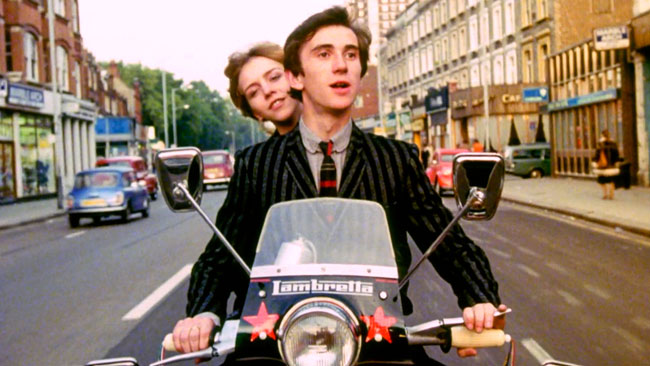
Phil Daniels and Leslie Ash in Quadrophenia (1979).
While Daniels was soaking in the Mod lifestyle, 17-year-old Ash was entering a world she barely understood. “When I was asked to audition, I didn’t know much about mods or their music,” she admits. “I was 17 and a bit of an airhead, so I didn’t appreciate what a remarkable crew we had working on the film.”
The production was a “fairly small unit” with a tight budget, which meant luxury was non-existent. As the shoot moved to Brighton to recreate the infamous Bank Holiday riots, the sheer scale of the subculture they were depicting became terrifyingly real. “The moment we walked out of the hotel to start shooting, we saw all these scooters and hordes of mods lined up against the seafront. It was amazing,” Ash remembers.
However, the “amazing” quickly turned into “anarchy.” Roddam wanted realism, and in the late 70s, that meant letting the cameras roll amidst genuine mayhem.
Ash recalls the Brighton riot sequences as a blur of legitimate fear: “It was supposed to be staged but it was chaos, with police and members of the public getting involved. It was like a real riot – health and safety didn’t come into it at the time. When Franc shouted ‘Action!’ everyone started running. They made sure Phil and I were at the front so that we didn’t get trampled on, but it was so frightening. I actually got knocked to the floor.”
The conditions on the coast were gruelling. Shot at the end of September, the cast battled biting winds and long hours. “There were no Winnebagos in those days,” Ash laughs. “We all used to huddle together in someone’s car or a shopfront. We worked from eight in the morning right to about midnight. I think I was paid about £500. The film company really got their money’s worth.”
The famous alleyway and the “nude scene” stand-off
One of the most iconic moments in Quadrophenia is the fumbled, desperate encounter between Jimmy and Steph in a Brighton alleyway. For Ash, however, that scene almost didn’t happen. When she first saw the full script, she was “devastated” to find a nude scene on the pages. “I said: ‘There’s no way I am going to do that!’ I was quite prepared not to do the film,” she says.
The production eventually blinked, offering a rewrite that resulted in the gritty, realistic encounter fans see today. Despite the scene’s reputation for authenticity, Ash is quick to debunk the urban legends that have circulated for forty years.
“There’s been loads of speculation over the years with people saying: ‘Oh, apparently they really did it.’ Well, I can honestly say, no, nothing happened – it was all acting. It’s just a bit embarrassing to watch. It’s the only sex scene I’ve seen where both actors are fully clothed.”
The edge of the cliff
While the alleyway scene provided emotional weight, the film’s climax at Beachy Head provided the literal and metaphorical edge. In a move that goes against standard narrative progression, the production shot the ending of the film first. For Daniels, it was nearly a very short career. “Riding along the clifftop, I got a lot closer to the edge than I was meant to and fell off the scooter a couple of times,” Daniels says.
The response from the crew was a stark reminder of the film’s “no-nonsense” British grit. “I remember the first assistant director, Ray Corbett, telling me: ‘Listen, it’s the third day. If you fell off that cliff, d’you know what would have happened? They would have recast you tomorrow.'”
For Daniels, the film continues to resonate because Jimmy Cooper isn’t a cinematic caricature; he’s a mirror. “Jimmy’s not a hero, he’s just a normal boy next door, and that’s what makes him work,” he reflects. “He ultimately rejects the whole ethos of being a mod – making your whole life revolve around sitting on a silly scooter. In the end, he had to jack it in to move on.”
For both actors, the film is a permanent shadow. It defined their careers in ways they couldn’t have predicted as teenagers in 1978. Daniels admits that a friend’s warning — “If it’s a hit, they may only ever remember you as Jimmy” — proved prophetic.
“Quadrophenia’s a difficult one to live down,” he concludes. “Over the years, it’s filled me with horror – and joy.”
Discover more about British cinema on Top 10 Films
From Salford Slums To Cannes: The Bittersweet Genesis Of “East Is East”
From Salford chip shops to a Cannes standing ovation, Ayub Khan Din and Jimi Mistry reveal how the bittersweet British classic East Is East broke the mould.








Comments