
 By
By 
Within British cinema, few films have balanced the razor-sharp edge of domestic tragedy with the warmth of a Northern comedy as deftly as East Is East. What began as a series of therapeutic scribbles by a drama student eventually became a cultural touchstone, breaking the “celluloid ceiling” for British Asian stories. The film remains a masterclass in how specific, localised heritage can translate into a universal exploration of identity, patriarchy, and the immigrant experience.
The story’s DNA is rooted in the real-life Salford upbringing of writer Ayub Khan Din. “My Pakistani father came over from India in the merchant navy, jumped ship in London in 1927 and moved to Manchester,” Khan Din recalled in an interview with The Guardian. His father met his Irish/English mother, a bus “clippie,” and together they raised ten children in a chip shop amidst the Salford slums. This intersection of cultures and the friction of a large family provided the raw material. “I’d always wondered how my parents coped in their mixed-race relationship… I started writing down little incidents from my childhood.”
The journey to the screen

For years, the script languished in a drawer. Its rescue came via the Tamasha Theatre Company, whose 1996 workshop at the Birmingham Rep transformed the personal memoir into a theatrical phenomenon. “It was such a personal piece I didn’t know if it would relate to an audience,” Khan Din admits. “But we sold out by word-of-mouth before we’d even got to London.”
Despite the stage success, the transition to film was fraught with the industry’s typical risk-aversion. When the BBC balked at the project — citing the poor commercial performance of the 1995 immigrant drama Brothers in Trouble — Film4 stepped in to fund the entire budget. It was a golden era for the studio, which had recently produced Shallow Grave and Trainspotting.
For the cast, the stakes were personal. Actor Jimi Mistry, who played the rebellious Tariq, felt an immediate kinship with the material. “My father is from India, my mother from Northern Ireland… I don’t think a part has ever fitted me so perfectly,” Mistry noted while speaking to The Guardian in 2021. However, the transition from stage to screen wasn’t guaranteed for the original actors. “For two years, we knew they were auditioning… we were saying to each other: ‘Have you had a call?'” Eventually, the chemistry of the original troupe won out, preserving the “huge bond” that anchors the film’s authenticity.
A legacy of identity
When East Is East premiered at the Cannes Film Festival, the reaction was seismic. “The film got a standing ovation… and then just snowballed,” says Khan Din. Mistry remembers the whirlwind shift from sleeping on a hotel room floor in France to being greeted with a standing ovation on the set of EastEnders the following Monday.
Beyond the accolades, the film’s enduring power lies in its refusal to sanitise the British Asian experience. It utilised “sensitive, racist language” and leaned into the “bittersweet” nature of a family torn between a patriarchal father and the swinging sixties of Manchester.
Decades later, the film’s relevance remains undiminished. As Khan Din observes, in a post-Black Lives Matter landscape, we are all still “questioning our identity, where we belong and what our place is within the history of this country.” East Is East didn’t just show Asians on screen; it showed them as complicated, rebellious, and quintessentially British.
Discover more behind the scenes stories on Top 10 Films
“Kes”: A Legacy Of Flight And Freedom In Yorkshire’s Cinematic Heart
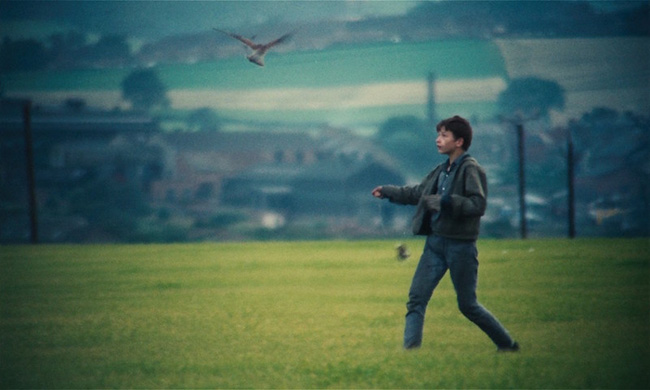
A new BFI book celebrates the enduring legacy of Kes — Ken Loach’s 1969 classic that gave voice to working-class Britain and remains one of the best films set in Yorkshire.
Discover more on British Cinema
British Asian Cinema In The 1980s And 1990s

Om Puri as George Khan, the patriarch of the Khan family in East Is East
By the 1980s, a new generation of filmmakers emerged, driven by a desire to address issues of cultural activism, racism, and identity.














Comments