
 By
By 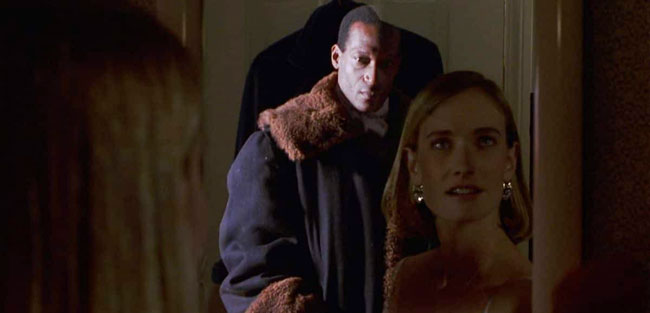
The legacy of 1992’s Candyman is not merely one of jump scares and urban legends; it is a profound piece of cinematic gothic lore rooted in a history that is as painful as it is poetic. In a 2019 interview with The Guardian, the late, great Tony Todd reflected on the creation of Daniel Robitaille — the man behind the hook — offering insights in how an actor anchors a supernatural entity in visceral reality.
For Todd, the character’s soul was never found in the horror tropes of the 90s, but in the ancestral echoes of American history. He viewed the character through a musical and historical lens: “I’m also a blues musician, and all blues artists can trace their pain to the slavery fields of the Mississippi Delta. Anyone who’s a fan of jazz and blues can hear that howl. I consider this film a direct descendant of that.”
This connection to the past was a deliberate choice to ensure the character had gravity. Todd was acutely aware of the pitfalls of the genre and worked closely with director Bernard Rose to ensure the portrayal was elevated.
“Bernard and I hung out in Chicago for a few days while he did location work. I wasn’t worried about him being a white English guy, we were like lost siblings who had found each other. I trusted his intellectualism and my own instincts. I knew I wasn’t going to create a caricature and that I wanted to root the character deep in the history of slavery in America.”
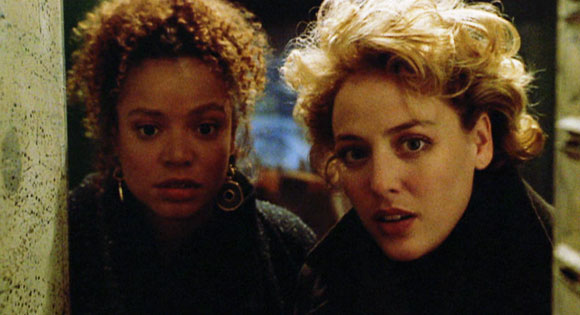
The atmosphere on set was one of intense psychological exploration. One of the film’s most haunting elements was the dynamic between Todd and his co-star, Virginia Madsen. Todd recalled how the production used unconventional methods to achieve the film’s dreamlike, oppressive tone, particularly during their first shared moments on screen.
“My first scene, about 10 days into shooting, was when I appear to Virginia [Madsen, who plays Helen] in the parking lot. I had already been hanging around on set in costume, and felt comfortable: I knew that scene was going to be monumental. We spent a day on it, the footsteps, the lighting, my guttural voice.”
Bernard Rose hypnotised Virginia Madsen in Candyman

To push the performances into the ethereal, the director employed a unique technique that bonded the leads in a way rarely seen in horror filmmaking. “Bernard and Virginia had been to see a professional hypnotist together; every time she did a scene where I was involved, Bernard would take her aside for 10 minutes and hypnotise her with techniques he’d learned there. This trance state allowed she and I both to probe deeper into our scenes and our characters. It created a real, three-way process of bonding and trust between her, me and Bernard.”
However, perhaps the most legendary piece of Candyman trivia involves the practical effects — specifically, the bees. While modern films would lean on CGI, Todd endured the physical reality of the hive, turning a logistical nightmare into a lucrative, albeit painful, badge of honour.
“I negotiated a bonus of $1,000 for every sting during the bee scene. And I got stung 23 times. Everything that’s worth making has to involve some sort of pain. Once I realised it was an important part of who Candyman was, I embraced it. It was like putting on a beautiful coat.”
Decades later, Todd remained humbled by the film’s enduring relevance. While many actors fear being typecast, Todd saw the longevity of the role as a testament to its power to cross cultural boundaries and even serve as a tool for social dialogue.
“I’ve done 200 movies, this is the one that stays in people’s minds. It affects people of all races. I’ve used it as an introductory tool in gang-intervention work: what frightens you? What horrible things have you experienced?”
Through Todd’s reflections, we see a portrait of a dedicated artist who didn’t just play a monster; he channelled a history of grief and transformed it into an icon that continues to haunt and provoke audiences today.
Discover more behind the scenes stories on Top 10 Films
“Smart Art Horror”: Xander Berkeley Reflects On “Candyman” And Horror Craft

Xander Berkeley reflects on playing Trevor Lyle in Candyman, blending theatre skills with cinema and exploring “smart art horror.”









Comments