
 By
By 
The year was 1993, and Steven Spielberg was trapped in a psychological winter. While filming Schindler’s List on location in Poland, the director was immersed in the most harrowing production of his career. Reconstructing the atrocities of the Holocaust at the gates of Auschwitz-Birkenau took a devastating toll on the cast and crew; Spielberg famously spent his evenings weeping or staring at the wall, unable to shed the darkness of the day’s shoot.
However, thousands of miles away in San Francisco, a man in a floral dress and a wig was preparing a weekly lifeline. Robin Williams, then filming Mrs. Doubtfire, recognised that his friend was drowning in grief and decided to intervene the only way he knew how: through the sheer, restorative power of comedy.
The Friday night comedy sets that saved Steven Spielberg

The ritual became a scheduled necessity. Every Friday, which marked the beginning of the Sabbath, Williams would call Spielberg on a crackling long-distance line. These weren’t mere check-ins or polite conversations; they were full-throttle, fifteen-minute stand-up routines performed over speakerphone for the benefit of the exhausted director and his traumatised crew.
Speaking at a 25th-anniversary screening of the film at the 2018 Tribeca Film Festival, Spielberg recalled the profound impact of those calls. He told the audience that Williams knew exactly what he was going through, and he would perform until Spielberg was “laughing hysterically” because he simply had to release the built-up tension.
“Robin knew what I was going through, and once a week, Robin would call me on schedule and he would do 15 minutes of stand-up on the phone,” Spielberg is quoted as saying in USA Today. “But the way Robin is on the telephone, he’d always hang up on the loudest, best laugh you’d give him. He’d never say goodbye, just hang up on the biggest laugh.”
Williams himself has talked about these sessions in several interviews, including a 2013 Reddit AMA, when he admitted he only recalled a couple of calls. I did, however, recognise the benefit his brief conversations were with his Hook director. When prompted by a Reddit user to discuss the uplifting phone calls, Williams replied: “I think I only called him once, maybe twice. I called him when I was representing People for the Valdheimers Association. A society devoted to helping raise money to help older Germans who had forgotten everything before 1945. I remember him laughing and going “thank you.”
He often leaned into a Yiddish-inflected persona to provide a safe, cathartic way to process the environment. In a 1998 television interview, Williams said: “So I would call him and just riff for him… ‘Hello, Steven. I’m sending you some kosher email. You’ve got Mohel! Steven, I’ve been on eBay, and I’ve changed it to Oy Vey.'”
Williams understood that while Spielberg was documenting the worst of humanity, he desperately needed a reminder of the light, and those fifteen minutes became a sacred space where the horrors of the Holocaust could be momentarily pushed aside by the absurdity of a man doing voices on a speakerphone.
Why the Mrs Doubtfire star provided emotional life support
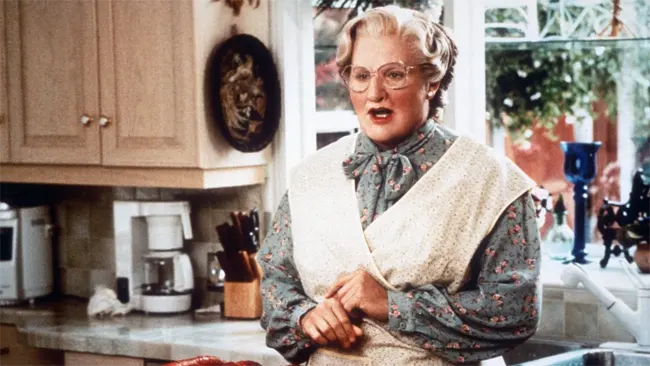
The necessity of this comedy therapy cannot be overstated when looking at the environment on the Schindler’s List set. Spielberg has often spoken about how two Israeli actors suffered full nervous breakdowns after filming the shower sequence, and the director himself admitted that he had to watch tapes of Saturday Night Live every night just to clear his brain of the day’s trauma.
Williams filled a gap that scripted entertainment could not; he provided a personal, real-time connection that forced Spielberg back into the present. By choosing to call on Fridays, Williams honoured the Jewish tradition of the Sabbath, offering a release that allowed the director to survive the gruelling months of production.
This story serves as a testament to the unique empathy of Williams, a man who often felt the pain of others as acutely as his own. While he was busy creating a comedy classic of his own, he prioritised the mental well-being of a peer who was carrying the weight of history on his shoulders.
The “Schindler calls” remain one of the most touching behind-the-scenes stories in Hollywood history. As Spielberg reflected decades later, those calls were the only things that kept him sane during a journey into the heart of darkness.
Discover more behind the scenes stories on Top 10 Films
Why Was Eddie Murphy Nearly Fired While Making “48 Hrs”?

48 Hrs. marked Eddie Murphy’s breakthrough, transforming initial struggles into a genre-defining buddy cop classic alongside Nick Nolte.







Comments