
 By
By 
Alfred Hitchcock is one of the most renowned and influential film directors. His career ushered in two key periods of cinema history – the arrival of sound and the introduction of colour. He perfected his art in both disciplines, reverting back to black and white when he felt the need, and mastering not only silent pictures but sound and colour ones too.
Hitchcock, surprisingly, never won an Oscar for Best Director but he did lose out to John Ford and Billy Wilder twice so remained in good company. For many, however, he is the greatest director who ever lived. The following ten films are my picks for his best work.
The best Alfred Hitchcock films
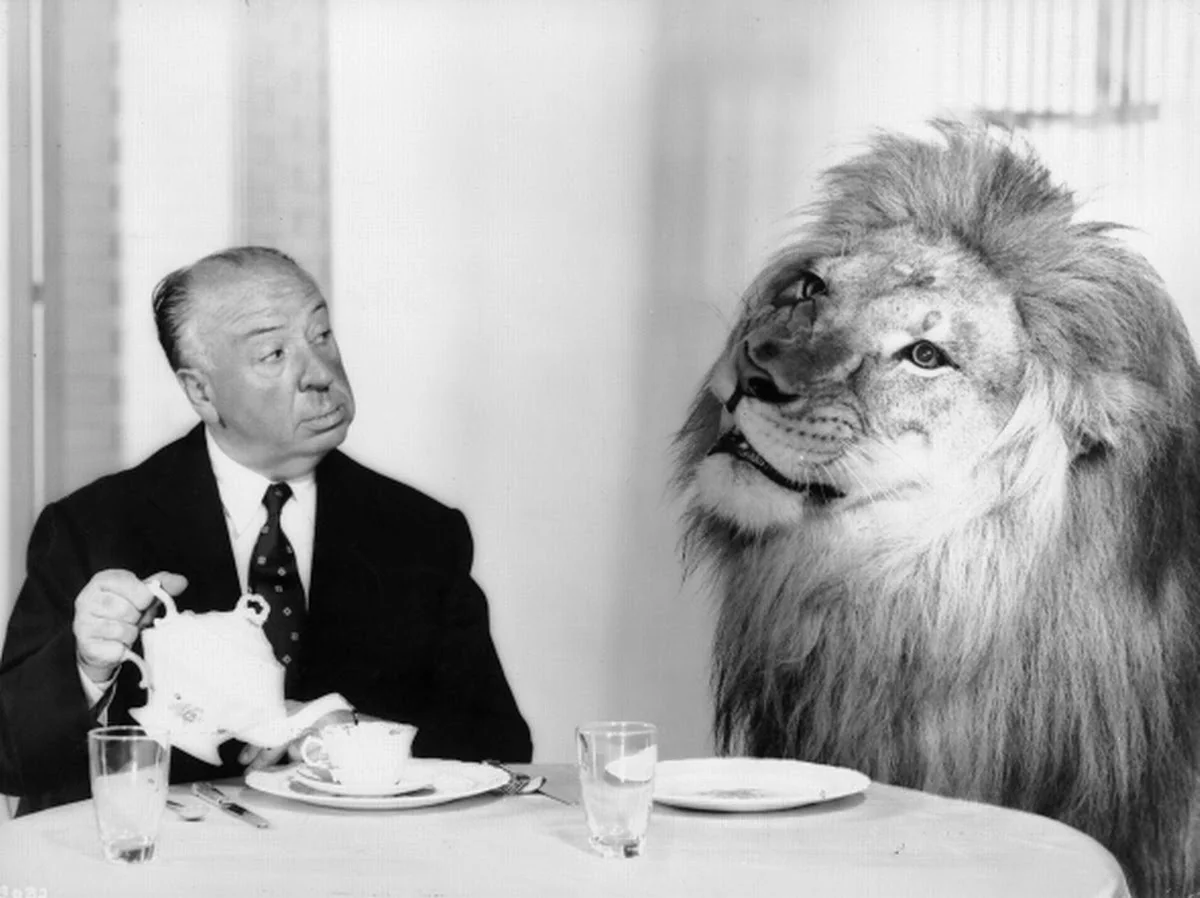
Alfred Hitchcock’s influence on cinema is undeniable, with his unique ability to blend suspense, mystery, and psychological drama shaping the thriller genre for generations to come. His films are characterised by their meticulous craftsmanship, innovative techniques, and ability to push the boundaries of screen storytelling. From the masterful manipulation of tension to the development of complex characters, Hitchcock’s work consistently set a high bar for filmmakers.
10. Lifeboat (1944)

Hitchcock was capable of grandiosity, as seen in the sweeping San Francisco locations of Vertigo and the cross-country action of North by Northwest. However, he was equally adept at crafting intimate, character-driven stories with minimalist staging, as demonstrated in Dial M for Murder and Rope.
In Lifeboat, he utilises a single location to tell the gripping tale of several survivors following a World War II U-boat attack in the North Atlantic. The British survivors, united by their shared trauma, manage to help each other, but their fragile harmony is disrupted when they rescue a new survivor – the German U-boat captain who sank their ship. The moral dilemma of whether to shelter him or cast him back into the sea threatens to tear the group apart.

Made in 1944 before the end of the war, Lifeboat serves both as a tribute to British bravery and the humane nature of the Allied forces in the face of battle, and as a showcase of Hitchcock’s technical mastery. After growing tired of the melodramas he had become known for in the UK, Hitchcock found in Lifeboat, based on a story by John Steinbeck, a perfect opportunity for something different.
Filming the entire movie on a lifeboat presented a unique challenge – how could Hitchcock maintain dramatic tension when the characters were confined to a single setting? Initially, Steinbeck was tasked with writing the screenplay but felt limited by the confined space, so Jo Swerling and Ben Hecht took over. What resulted is one of Hitchcock’s finest films: minimalist, singularly located, and deeply focused on character.
9. Dial M For Murder (1955)
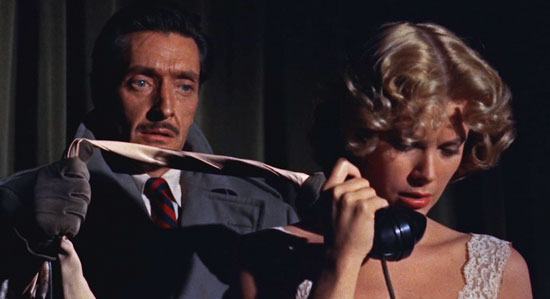
Frederick Knott wrote the original play that formed the basis for Dial M for Murder. Written in the early 1950s, it first debuted as a BBC television play before enjoying successful runs in London’s West End and on New York’s Broadway. Several years later, Knott wrote his only other successful play, Wait Until Dark, another single-location thriller starring Audrey Hepburn. Both works are prime examples of expertly crafted, character-driven suspense. They share Knott’s signature theme of an innocent woman trapped in a seemingly lawless situation, and both are set almost entirely within the confines of the victim’s apartment.
Dial M for Murder is compelling in its simplicity. Hitchcock delivers the film with style and controlled elegance, transforming the otherwise unremarkable set and straightforward action into something thoroughly captivating. A standout moment is when Tony Wendice (Ray Milland) realises his watch has stopped, causing him to be late in calling his contract killer, which risks derailing his entire plan. The sequence, though simple in its construction, is perfectly executed – a tense and beautifully edited series of unpredictable developments. Throughout it all, Grace Kelly plays the innocent woman at the centre of a will-she-won’t-she predicament, adding a constant thread of suspense to the unfolding drama.
8. Rope (1948)
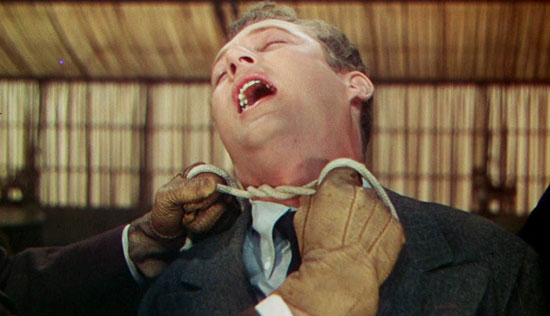
Alfred Hitchcock was known for pushing the boundaries of cinema, and he was also deeply technically minded. Rope provided him with a unique opportunity to present something audiences had never seen before while challenging his own expertise with the camera.
Shot in a single location with long, continuous takes, Hitchcock crafts the film to appear as though it is one continuous, unedited sequence. Since film reels last about 11 minutes, each take is roughly the same length, with cuts cleverly concealed by blacking out the screen with a character or prop.
In many ways, Rope shares similarities with a stage play, as the actors had to deliver their lines perfectly in one take, and the location remained fixed. Considering that this had never been attempted before and that cameras in the 1940s were large, bulky, and cumbersome – requiring multiple people to operate them – Rope becomes even more impressive.

The film centres on the aftermath of a murder. Two friends, played by Farley Granger and John Dall, hide the body of their victim in a trunk they use as a buffet table. They then invite acquaintances of the deceased, including intellectual James Stewart, to the apartment, where they attempt to demonstrate their ability to carry out and cover up the “perfect murder.”
The film is both sadistic and darkly comic, with subtle undertones suggesting a homosexual relationship between the two murderers. These sexual references were overlooked by censors at the time, who would have likely demanded cuts or rewrites. Hitchcock, along with writers Hume Cronyn and Arthur Laurents, cleverly alluded to this possible relationship without being overt or crude. For example, there is only one bedroom in the apartment shared by the two men.
7. Psycho (1960)

Psycho is undoubtedly Alfred Hitchcock’s most famous film. When asked to name a Hitchcock movie, it’s Psycho that most people will mention, whether they’ve seen it or simply heard of it. Its popularity is largely due to its profound influence on cinema in the 1960s and 1970s, particularly on the slasher genre. Renowned directors like Tobe Hooper, Wes Craven, and John Carpenter have cited Hitchcock’s classic as a major inspiration for their own horror masterpieces. In fact, it could be argued that without Psycho, there would be no Halloween or The Texas Chainsaw Massacre.
However, Psycho – often the first Hitchcock film many people encounter – also creates a misleading impression of the director. It suggests that Hitchcock is a filmmaker known for implied violence and supernatural, gothic horror. Yet, Psycho and The Birds are the only films in Hitchcock’s extensive body of work that could be categorised as horror. Hitchcock himself would refer to them as suspense films or thrillers, but they stand apart from his usual stories by incorporating strong fantastical elements. This deviation may explain why Psycho is not only many people’s favourite Hitchcock film but also the only one they’ve experienced.

And Psycho is a great film. It takes bold risks and was far ahead of its time. Janet Leigh, the original scream queen and mother of Jamie Lee Curtis — arguably the most iconic “slasher screamer” – takes the lead. Hitchcock immediately introduces her as a thief, only to shockingly kill her off halfway through the film in one of the most famous scenes in horror cinema.
Leigh checks into the quiet Bates Motel, where she meets Norman Bates, who seems mild-mannered and harmless. After retreating to her room to take a shower, she is suddenly attacked and stabbed to death by an unseen woman. The rest of the film follows the investigation into her disappearance, as her family and the police try to uncover the identity of her killer.
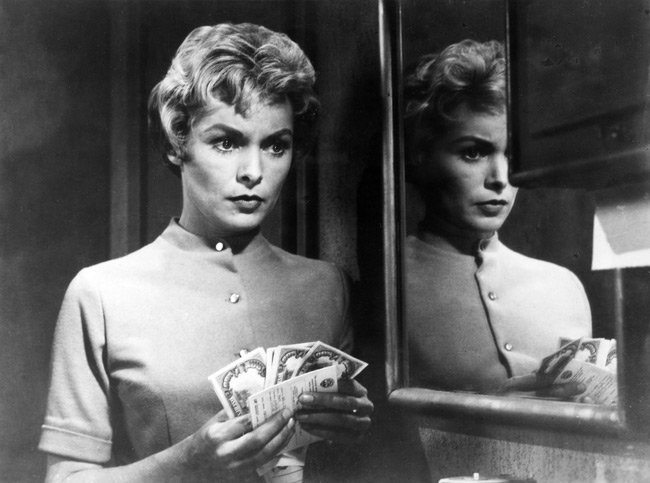
The film is beautifully macabre, with the stark black-and-white photography perfectly capturing the foreboding atmosphere of Norman Bates’ eerie, castle-like home. It culminates in one of Hitchcock’s most disturbing final sequences – simple yet profoundly effective.
6. The 39 Steps (1935)

Released in 1935, The 39 Steps is often regarded alongside The Lady Vanishes as a highlight of Hitchcock’s British films. Based on John Buchan’s novel, the film’s plot centres around a man, Richard Hannay, who is thrust into a complex conspiracy after being wrongly accused of murder. This theme of an ordinary man caught in extraordinary circumstances became a staple in Hitchcock’s work, influencing later films like Saboteur and North by Northwest.
The film is notable for its dynamic characters, particularly the chemistry between Robert Donat’s dashing Hannay and Madelaine Carroll’s Pamela, whom he is handcuffed to in a dramatic sequence. Hitchcock expertly uses this forced pairing to explore themes of tension, trust, and romance, making it a quintessential example of his skilful blending of suspense and personal relationships.
The 39 Steps also shines due to its technical achievements, with Bernard Knowles’ cinematography creating a vivid, atmospheric setting, particularly during the moorland scenes. The film’s success cemented Hitchcock’s place as a leading director in British cinema.
5. Shadow Of A Doubt (1943)

Before Vertigo was re-evaluated and crowned as Hitchcock’s greatest film by most critics, Shadow of a Doubt held that title. In fact, Hitchcock himself considered it his finest artistic achievement. Less flashy than his later American films, Shadow of a Doubt shares more in common with the slow-burning tension of Psycho than with the technical innovation of Rear Window or the action-adventure style of North by Northwest.
It is a character-driven study, centred around a young girl named Charlie and her uncle, also named Charlie. Teresa Wright, who plays the niece, is overjoyed when her uncle comes to visit the family. However, her admiration turns to suspicion when she begins to believe he is the Merry Widow Murderer – a serial killer on the run from the police. Uncle Charlie, portrayed with chilling restraint by Joseph Cotten, becomes aware of her suspicions and decides he must eliminate her to protect his secrets.
With two outstanding performances at its core, Shadow of a Doubt is driven by a unique dynamic between the characters, who start with a deep affection for one another before suspicion and tension mount. This complex relationship makes the film one of Hitchcock’s most intriguing and rewarding.
4. North By Northwest (1959)

Celebrated American film critic Pauline Kael famously declared North by Northwest to be “one of Hitchcock’s most entertaining American thrillers.” If Hitchcock had made a James Bond film, it would likely resemble this one. Along with Psycho and The Birds, North by Northwest is among Hitchcock’s most widely seen films. It’s also one of his most accessible, making it a perfect introduction to his signature style.

In North by Northwest, Cary Grant stars as Roger Thornhill, the quintessential wrong man ensnared in a tightening web of intrigue, corruption, and murder. As Thornhill is pursued across America by enemy agents, government officials, and the police – each of them chasing him for reasons he doesn’t understand – he’s forced to flee for his life.
Grant, with his suave and sophisticated charm, plays the character much like a Bond hero, dodging bullets and evading planes as he desperately tries to survive. The film is fast-paced, energetic, and frequently hilarious, thanks to Grant’s impeccable comedic timing. It’s also romantic, with Eva Marie Saint providing the perfect muse for Thornhill. Hitchcock delivers one of his most iconic final sequences, culminating in a breathtaking depiction of Mount Rushmore.

Hitchcock, ever the master of sexual innuendo, finds the perfect conduit for his playful gags in Grant. The film concludes with one of the most memorable cuts and final shots in Hitchcock’s career. As Grant clings to the edge of Mount Rushmore, urging Saint, who is holding on to a ledge, to reach for his hand, she cries out that she can’t do it. He reassures her, and when their hands finally meet, Hitchcock cuts from the cliff edge to a train compartment, where Grant lifts Saint onto the bed. They begin to kiss, and Hitchcock concludes the scene with a perfectly timed cut to an exterior shot of the train entering a tunnel – a classic, cheeky finish to one of cinema’s great thrillers.
3. Notorious (1946)

David O. Selznick played a crucial role in bringing Alfred Hitchcock to America, helping him establish his career in Hollywood. However, it was during the making of Notorious that Hitchcock realised Selznick was, in fact, hindering his creative genius. Prior to this, Selznick had paired Hitchcock with writer Ben Hecht and star Ingrid Bergman for the 1945 psycho-drama Spellbound. For Notorious, Selznick again assembled the same team, but Hitchcock managed to keep the powerful producer at arm’s length, finding the creative process – and the final product – far more satisfying.
Notorious stands as one of Hitchcock’s standout early American films, and displays the traits that would define his Hollywood golden period: a beautiful female lead, a romantic subplot, espionage, political intrigue, and, of course, masterful use of the camera.
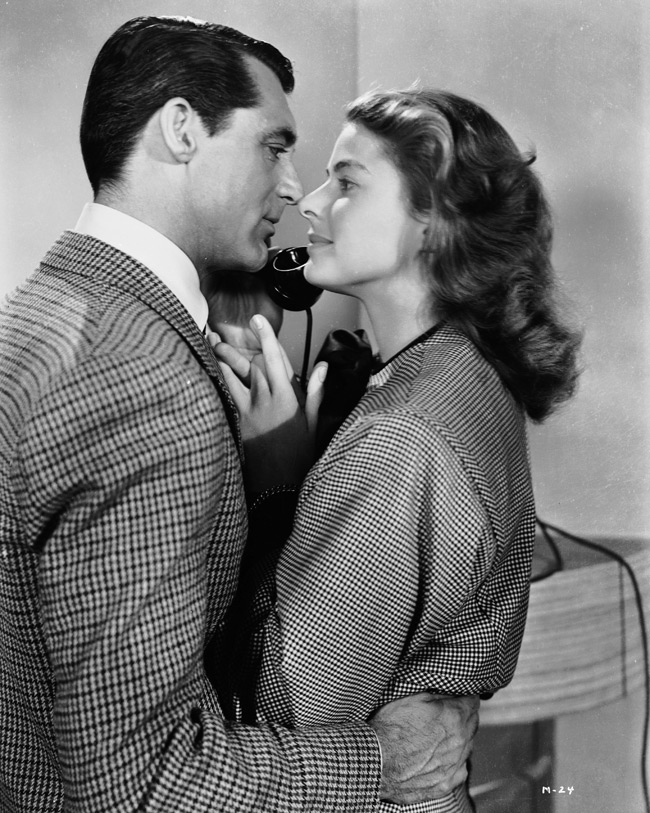
Set at the end of World War II, the film follows Cary Grant as a U.S. agent who recruits Bergman to infiltrate a group of Nazi exiles in Argentina. Under the guise of a marriage to Claude Rains’ character, a Nazi sympathiser, Bergman finds herself caught between duty and her growing affection for Grant. Hitchcock ratchets up the tension as Grant races to save Bergman from the group before they discover her true allegiance to U.S. intelligence.
Notably, Notorious also featured the longest on-screen kiss at the time, another example of Hitchcock’s ability to push the boundaries of cinematic conventions and explore uncharted territory. This film remains a testament to his innovative approach to filmmaking and his unique ability to blend suspense with romance and political intrigue.
2. Vertigo (1958)

Vertigo is Alfred Hitchcock’s most personal and arguably his most unique film. While it retains familiar elements – such as a mysterious femme fatale, a tale of intrigue, and a protagonist driven down a dangerous and destructive path – Vertigo is more concerned with its characters than with the usual Hitchcockian themes of crime and murder.
Here, James Stewart plays an acrophobic former detective hired by a friend to follow his wife, whom he believes is possessed by a malicious spirit. Kim Novak plays the wife, and Stewart quickly discovers that not everything is as it seems. Initially sceptical of his friend’s claim, Stewart uncovers that Novak’s character lives her life as though she were the reincarnation of a woman named Carlotta. She dresses like Carlotta, visits the house where the woman once lived, and even gazes at a painting of her in a museum. As Stewart becomes increasingly captivated by her beauty, he begins to pity her, sensing that something is deeply wrong and wanting to help.
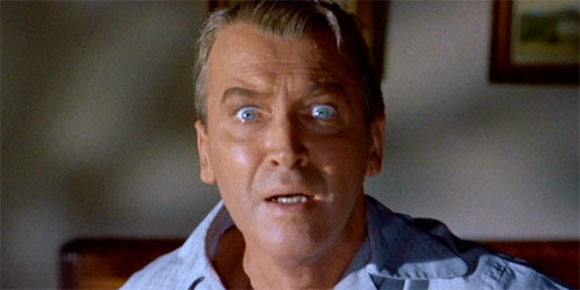
At its core, Vertigo is as much about Stewart’s obsessive attraction to the mysterious woman (and, by extension, Hitchcock’s own fixation with similarly enigmatic women) as it is about solving the film’s central mystery. While the suspense of the crime is present, it takes a backseat to the complex psychological drama at play.
When Stewart saves Novak after she throws herself into San Francisco Bay, their fractured relationship begins to take shape – only for it to be tragically cut short when she flees up a church bell tower and takes her own life. Stewart, desperate to prevent her suicide, is paralysed by his fear of heights and unable to reach her in time. He hears her scream, then watches helplessly as her body falls to the ground. Following an inquest, Stewart is partially blamed for not preventing the death, although Novak’s husband does not hold him accountable, and the death is ruled a suicide.
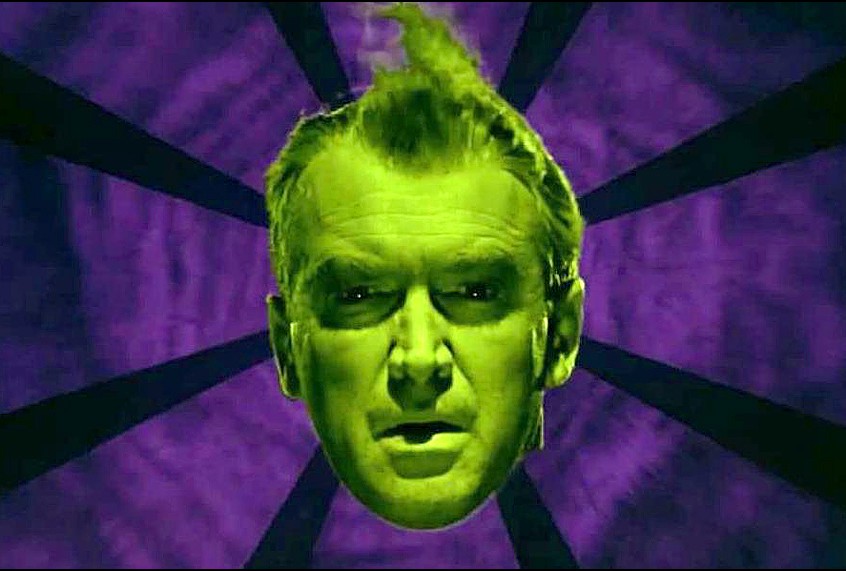
But Stewart cannot forget the blonde beauty. Still in love with her, he finds a woman – a brunette – who bears a striking resemblance to his friend’s late wife. He follows her and asks her to dinner, setting the stage for one of Hitchcock’s masterful cinematic ploys. Hitchcock, who believed suspense came from giving the audience knowledge that the characters do not have, uses a flashback to reveal key details of the mystery to us.
As Stewart uncovers more about the woman’s identity, the audience eagerly anticipates his discovery of the truth. One particularly brilliant moment occurs when Stewart receives a handwritten letter, which the person responsible for the plot proceeds to read aloud. The letter is then crumpled up and discarded, a sequence that leaves the audience on edge, wondering how Stewart will eventually piece everything together.

Vertigo is widely regarded as one of Hitchcock’s greatest works and has become one of the director’s most beloved films. It regularly appears in the top 10 of Sight and Sound’s poll of leading critics and filmmakers, with many considering it Hitchcock’s finest achievement. The film is particularly memorable for its iconic “dolly zoom” shot, in which the camera is simultaneously pulled back while zooming in, creating a disorienting, hallucinatory effect that thrillingly visualises a person’s fear of heights. Hitchcock’s trademark locations, such as the attempted suicide scene with the Golden Gate Bridge in the background, are also used to great effect.
Vertigo is a film that leaves a lasting impact and rewards multiple viewings. It remains a complex and haunting exploration of obsession, identity, and psychological suspense.
1. Rear Window (1954)

In one of Alfred Hitchcock’s most captivating films, long-time collaborator James Stewart is joined by the stunning Grace Kelly. Stewart plays L.B. Jefferies, a photographer confined to his apartment due to a broken leg. His girlfriend, Lisa Fremont (Kelly), cares for him daily as he recuperates. Bored and restless, Jefferies begins to spy on the neighbours across the courtyard through his window, and soon becomes convinced he has witnessed a murder and its subsequent cover-up. Lacking solid evidence, he must persuade both Lisa and the police to investigate.

Hitchcock’s mastery of the camera is on full display in Rear Window, a film that is remarkable for its spatial constraints. Most of the action unfolds within a single apartment, and the camera moves no more than fifteen feet throughout the majority of the film. Hitchcock’s camera, and by extension, the audience, is confined to Jefferies’ perspective, never leaving his apartment except for a few moments near the film’s conclusion. This constrained setting serves to heighten the tension, showcasing Hitchcock’s technical brilliance in maintaining a dynamic and visually compelling story within such limitations.

The brilliance of Rear Window – arguably Hitchcock’s finest work – lies in how it turns the audience into complicit voyeurs. We see the world through Jefferies’ eyes, and our knowledge is as limited as his. We have no insight into anything outside his experience, which creates a deeply personal and suspenseful sense of mystery. While Jefferies is convinced of the crime he has witnessed, the audience is left to form its own conclusions, interpreting the scant evidence in any number of ways. The tension is rooted in our hope that Jefferies is right and our desire to have our own suspicions confirmed. Did the neighbour commit murder and hide the body? As the film progresses, we eagerly await the resolution, our own theories hanging in the balance.
If you enjoyed our look at the best Alfred Hitchcock films, you may also like:
Some Make Them Hot: 10 Essential Billy Wilder Films

Billy Wilder was one of the finest filmmakers to ever work in Hollywood, his body of work including multiple classics like Some Like It Hot, The Apartment and Sunset Boulevard.









I have seen quite a few Hitchcock film and I have yet to see one I didn’t like. A top 10 would be tough. Can’t really disagree with any of these choices, they are all great films (although I’ve never seen Notorious or 39 Steps). I love The Birds and Spellbound and I know it isn’t one of the more popular Hitchcock selections, but I love Frenzy too.
Frenzy is a great film, I think so… Did you see North by North West? It also a nice movie.
No The Birds? Dan? No love for flappy birds?
Glad to see you included The 39 Steps… I saw this back in october for the first time on TV late one night, and was pleasantly surprised at just how well it holds up even after all these years! I would think that Psycho, Vertigo and Rear Window would be my top 3, with Birds at 4 and most of the rest rounding out the top 10.
Good list, and sure to be controversial…
Interesting combination as well as ordering of the films. Given a chance to do my own ordering, I’d place Psycho right at the top without any hesitation, so I was quite surprised at the 7th spot you gave it. But it has Rear Window at the top, which ranks next only to Psycho in my opinion, so that sort of pleased me. Vertigo is there right behind, and it sure ranks alongside Rear Window at the top of most Hitchcock polls. Dial M for Murder doesn’t seem to find many takers, so I was really happy to see it included in the list. There are a few films in the list that I haven’t checked out yet, so got to do that sooner rather than later. A very good list overall.
@Goregirl: I’m a big fan of Frenzy too. It would probably make my top 15 list.
@Rodney: I’ve always liked The Birds but never thought of it as one of Hitchcock’s best, certainly not top 15.
@Shubhajit: I feel Dial M For Murder is unfairly underrated and doesn’t seem to get talked about as one of Hitch’s best amongst the ‘critical elite’. For me it’s a brilliant example of minimalist location and tightly paced thrills in much the same way as Rear Window or the similar Wait Until Dark with Audrey Hepburn. Plus, I love to see Grace Kelly in Hitch’s films.
Brilliant list, Dan. Very well considered. You certainly know your Hitchcock! My favourite has always been Vertigo. Mainly because it has such delightfully dark undercurrents to it.
This is timely for me since I’m doing a Hitchcock movie in the AM Hollywood Fantasy Draft. 😉
Thanks Richard. Vertigo is an interesting one isn’t it. Critics didn’t warm to it when it was first released and yet now, not only is it rated as Hitchcock’s best by many, but it appears on lots of all time top movie lists. It’s been a mainstay in Sight and Sound’s yearly all time film polls.
Part of the reason I rate it so highly is because it seems to get better with every viewing. Whether that means in a few years time it’ll be my number one Hithcock film, I don’t know.
No THE LADY VANISHES – I always think that 39 Steps and Lady Vanishes are as good as each other and, if I were to do a top 10 hitchcock, i would have to place both of them close to each other!
@Simon: Yep, The Lady Vanishes is one of the Hitchcock films that I love and it was very hard to leave it off the top 10. But of his earlier British films I decided to go with Lifeboat and The 39 Steps. The Lady V would be top 15 definitely.
Great list! I’m not as well versed in Hitchcock as I’d liked to be, but Rear Window, Vertigo, North by North West and The 39 Steps would probably top my list. I’m also quite a big fan of Rebecca – any thoughts on that one?
@Tom: I’m a big fan of Rebecca too. It’s so difficult picking a top 10 Hitchcock as he never put a foot wrong between the 1940s and early 1960s. So many great films to choose from, and so many great films to leave out. I put off making this top 10 for a long time because of that reason – couldn’t pick ten films for the list. But ended up deciding to just go for it and I’m pretty happy with the ten I chose, and the order I placed them in.
Rear Window was always going to be number one as it’s one of my favourite films of all time.
Another great list Dan ! I’m glad to see the often underrated “Rope” hanging on this page… I want to add “The Man Who Knew Too Much” (1956) and “Rebecca” (1940) as #’s 11 and 12 respectively 🙂
Good list, glad to see you’ve added The 39 Steps a brilliant early Hitchcock film, I would also add The Lady Vanishes.
Here is my list:
10. Rebecca (1940)
9. The 39 Steps (1935)
8. The Lady Vanishes (1938)
7. Shadow of a Doubt (1943)
6. Strangers on a Train (1951)
5. Rear Window (1954)
4. Vertigo (1958)
3. The Birds (1963)
2. North by Northwest (1959)
1. Psycho (1960)
I haven’t hesitated putting Psycho at number 1 as I believe it best shows Hitchcock’s rare talents as a film editor (he was not only the master of suspense, he was the master of montage). The famous shower scene contains over 70 cuts in a mere 35 seconds! Each individual cut was carefully planned prior to shooting the film by Hitchcock himself.
THE BIRDS!
A very good list and, as someone said, well-considered. My favourites don’t always coincide with critical opinion – I dislike Psycho,e.g. because I dislike that type of horror film, but see why everyone else has to include it.
1. Vertigo
2. Rear window
3. North by north west
4. Shadow of a doubt
5. The lady vanishes
6. Notorious
7. The birds
8. To catch a thief
9. Strangers on a train
10.Foreign correspondent
I like your list. Although Psycho is definitely an important film, I don’t think that it and The Birds hold up well to repeated screenings (I’ve done so).
Well Dan, since I’ve only seen 3 films by Hitchcock, I can’t make my top 10 yet. So far North by Northwest is my favorite, followed closely by Spellbound mostly because I LOVE Gregory Peck 🙂 Thanks for the info, very helpful as I catch up on watching more Hitchcock classics.
Am I the only person not to like Vertigo? I’ve seen it twice and not only do I not think it’s a top Hitchcock film, I think it’s well below par.
Rope, Dial M and Notorious would have been nowhere near my own personal Top 10 and I believe professional critics would agree with me. Rebecca would have been in the Top 5 and Psycho would have been much higher.
Still, I enjoyed your article.
My all-time favourite director. Rope has to be my favourite becasue I love how claustrophobic it is. After that probably North By Northwest. Lovely write-up.
Epic List. I own all of these films and hold them all in high regard. I am such a Hitch Head. Good job!
Great list, I’d probably have North by Northwest closer to the top simply because of Cary Grant, a quick swap of it and Vertigo and I’d be happy :-).
Shocking confession time – I really don’t like The Birds. I found it to be overly melodramatic and the characters were so unlikeable that I wanted to see their eyes being pecked out. And really? No-one thought to pick up a shotgun or go “shoo”? Pleased it isn’t on the list.
Haven’t seen The Lifeboat, must check it out.
Vertigo voted No 1 film in sight and sound 2012, his greatest and most disturbing work, also contains several Hitchkockian jokes, such as the Barbara Bell Geddes character ‘vanishing’ and not least making the viewer
forget that the murderer got away with it!
I’m in the minority in that I can’t stand Notorious. Probably the film where Hitch shows his colors as far as his gender issues goes as he expects me to somehow care about a lead romantic couple where the man treats the woman like a doormat and she gladly takes it like the abused woman she is.
I’m also not the biggest fan of The 39 Steps, it’s a quality film, but it’s like a test run for North By Northwest and pales in comparison.
Lastly, there are his Grace Kelly films. They are all great movies, but she knocks them down a few pegs for me. I never got what people loved about her complete lack of charisma, she was the January Jones of her era of Hollywood.
That’s interesting that you have reservations about some of Hitchcock’s most widely loved movies. Certainly with regard to Notorious I feel the treatment of women was a product of the time period (not that it makes it right) and enjoy it for it is in this context while allowing Hitchcock’s perfect construction of thrills to win me over.
Grace Kelly might not have been the strongest actress but she had a radiant beauty that seems to shine through the screen. Hitchcock was great at capturing that.
I’d be interested to hear about your favourites…
If I were to rank his films it would go like this, (not one through whatever, but just general groupings of quality)
Master Work
North By Northwest
Vertigo
Strangers On A Train
Shadows Of A Doubt
Great
Psycho
The Birds
Rear Window
Rope
Lifeboat
The Lodger: A Story Of The London Fog
Young And Innocent
The Skin Game
Pretty Good
Rebecca
The 39 Steps
Jamaica Inn
Sabotage
Secret Agent
Blackmail
Mediocre
Notorious
The Farmer’s Wife
The Ring
Blah
The Man Who Knew Too Much (1956)
Mr. & Mrs. Smith
The Man Who Knew Too Much (1934)
Rich And Strange
The Manxman
Champagne
Easy Virtue
Terrible
The Number 17
June And The Paycock
So, he’s a director I love, and he’s made a lot of great films, but some genuine stinkers as well.
Great selection of favourites Bill. By the looks of things we tend to agree on a lot of his movies bar Notorious.
Vertigo is right up there for me – indeed, I could quite easily argue that it is my number one but I have a soft spot for Rear Window (which is partly due to my liking of Grace Kelly) alongside its obvious technical merit that encourages me to name it my top choice.
Regarding some of his unmentioned work – I do love Frenzy as well while Marnie has always left me cold. I’ve only actually seen two movies from you “Blah” and “Terrible” choices.
I count myself as a true Hitchcock fan, and have read a scad of books on his films and his life. I would toss Lifeboat, Dial M, and Rope off the list. Rope is just a stunt without dramatic tension. Dial M suffers from being based on a play, and it shows. Lifeboat is another stunt film which doesn’t allow for a mobile camera. In none of these claustrophobic films do you have tension-filled set pieces and what I would call cinematic excitement. Instead, I would replace those films with three of the following, which are all better: Rebecca, Foreign Correspondent, Strangers on a Train, and The Lady Vanishes. I might even go for To Catch a Thief or Spellbound; I’m a sucker for Grace Kelly and Ingrid Bergman. But I know all about these lists — they often feature picks that are bound to cause folks to get riled!