
 By
By 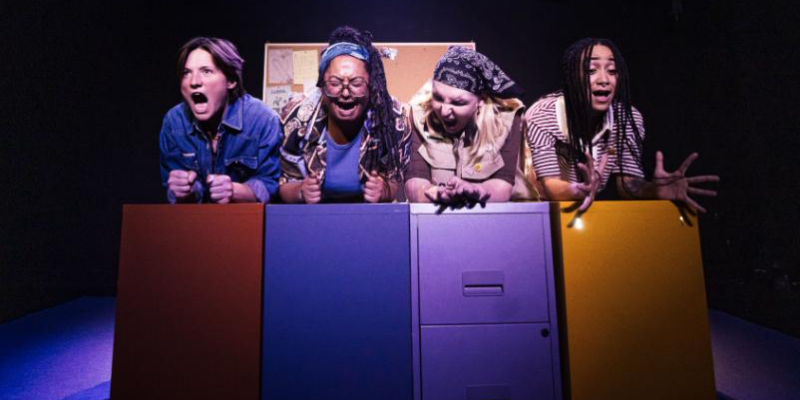
In 2022, we came across a video that GalDem did with Levi’s and Joy Yamusangie back in 2019 about the Camden Lesbian Centre and Black Lesbian Group (CLCBLG). Growing up in Camden and living there in our adulthood as Queers we were amazed we’d never heard of it so inevitably wanted to know more.
The fact the archive was at the Glasgow Women’s Library, 400 miles away, riled us. It made us question what happens when we don’t have access to our history and the Queer elder mentors we crave. It made us ask, whose histories are preserved and shared? And where do we go to find them?
When we visited the Glasgow Women’s Library to learn about the CLCBLG, we discovered terminology considered contemporary (such as intersectionality, men who have sex with men, and Women of Colour) used casually. There are often suggestions that these concepts are politically vogue, and this results from the invisibility of histories such as these.
While looking at the archive, it all felt so tangible. Thirty years ago, for a whole decade, there was a building where you could sit with a cup of tea, play pool, read a book, and eat a free lunch while talking about radical inclusivity to others who shared your experience.
Now, 30 years later, we were holding physical papers passed from hand to hand, telling us there was a building in North London full of friends. Communicating this now would be a seamless click, but we no longer have the free tea, the pool table, or the place to go where countless had been before you. There is greater clarity of communication in a digital world, but there is also less texture, less quality.
Is the closing of cultural and community venues for marginalised communities a kind of historical and sensory deprivation?
With the rise of loneliness often cited as a global pandemic, despite the rise of digital connection, the need for physical contact with our communities seems clear. But can the same be true for objects? For buildings? For sound? The joy we felt in the archive at being able to touch these objects from the past got us thinking: is the closing of cultural and community venues for marginalised communities a kind of historical and sensory deprivation?
Physical spaces to gather and share culture are fundamental to human existence, especially for marginalised people who often struggle to feel a sense of belonging. Whilst it’s brilliant that social media can make LGBTQIA+ folks feel a sense of belonging, if we don’t have a physical space to come together, talk, listen, dance, protest, be seen and feel safe, then we will not only continue to be marginalised in our personal lives, within our families, places of work and public spaces but also run the risk of polarising ourselves too. We also have to remember, that in the past LGBTQIA+ folks have not had a virtual space to gather so community spaces were vital to the community and continue to be today.
The importance of safe, physical spaces for marginalised groups to come together
Around 60% of LGBTQ+ venues in London have closed since 2002 and in the past year, it feels like doors have been closing at an alarming rate. Even this week the legendary queer performance art event Duckie put out a statement calling for community investment in the Royal Vauxhall Tavern (RVT). The beloved Grade II–listed building (the UK’s first building to be listed in recognition of its importance to LGBTQ community history) has recently been put on the market, owing to its owners’ plan to retire.
The situation is even more dire for lesbian venues, with only a tiny number of dedicated lesbian bars left in London. Yet lesbian nights and culture are on the rise. Recently a tapas and lesbian-specific pop-up bar, La Camionera, went viral because of its queues round the block – supposedly word spread in queer Whatsapp groups.
In the same week, a private members lesbian bar named L Community launched and was rightly criticised for its trans exclusionary policy. In addition, the RVT (one of London’s more accessible spaces) disappointingly closed for a number of weeks after attempting to host a Eurovision screening event despite performers’ call for solidarity with Palestine. They later cancelled all events on Eurovision night.
In our research, we were amazed by the sheer volume of work the CLCBLG put into creating the centre and keeping it running. There were so many different groups that accounted for a range of individual experiences.
At the Centre, you could find GEMMA, the disabled lesbians support group; Zammimass & Young Zamis for radical Black lesbians; Shakti Khabar, the South Asian Lesbian and Gay Network’s newsletter; Onyx for socials and discussions among “Black Lesbians and Lesbians of Colour”; and numerous events, socials, and support groups for mothers, unwaged people, survivors, and those still closeted.
It all contributes to this real feeling of energy and activity. Some of the more surprising things we’ll leave until you come and see the play but it’s important to say, like with all organising, it wasn’t all rosy.
In our exploration of the CLCBLG archive, we also found examples of institutionalised racism and a constitution that flip-flopped between accepting “women born as women” and excluding “constructed females.” Seeing even a snippet of their debates around this, between redactions, photographs, and hand-scribbled notes, you have to wonder—where would these conversations be now if this centre had continued to exist?
Dyke-naissance
Some of the most radical protests for queer rights in the 80s and 90s were thanks to lesbians. We are facing a nationwide rollback of the Gender Recognition Act, Section 28 style gender and sex education policing, and public claims from our Secretary of State for Business and Trade—Kemi Badenoch—that the UK has not profited from slavery or colonialism. If this is where we are now, where would we be if this centre had continued to thrive? If we had continued to have a space to organise?
Despite our show addressing the erasure of LGBTQ+ venues of the past, this issue is still pertinent today. A lot of organisers are tired and burnt out and with London’s rental costs getting more and more unattainable it is likely that the community will be increasingly isolated and eventually forced out of the city, and the cycle of gentrification will continue.
Despite this, the recent boom in Lesbian events and culture is being hailed as a dyke-naissance. As seen by the community rallying around La Camionera and other events, such as Pop-Up Dyke Bar and U-Haul Dyke Bar, the verve that Queers bring to support and champion our community is un-tampable, and appetite is only growing.
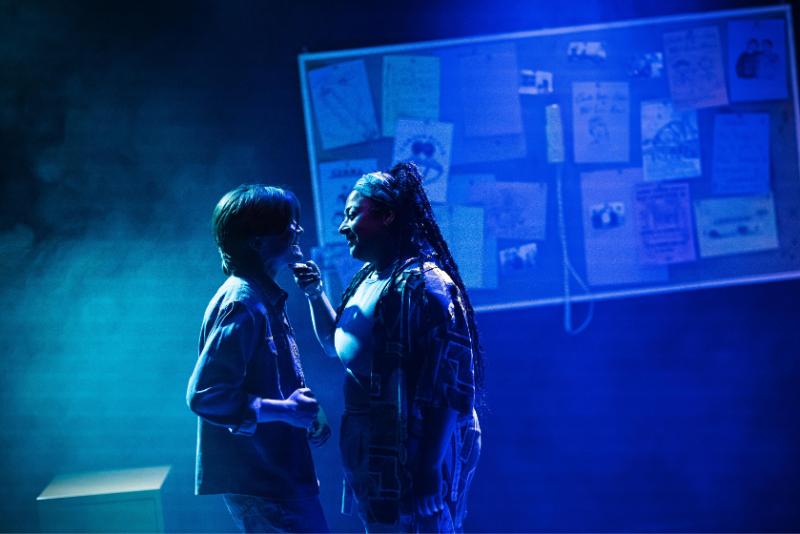
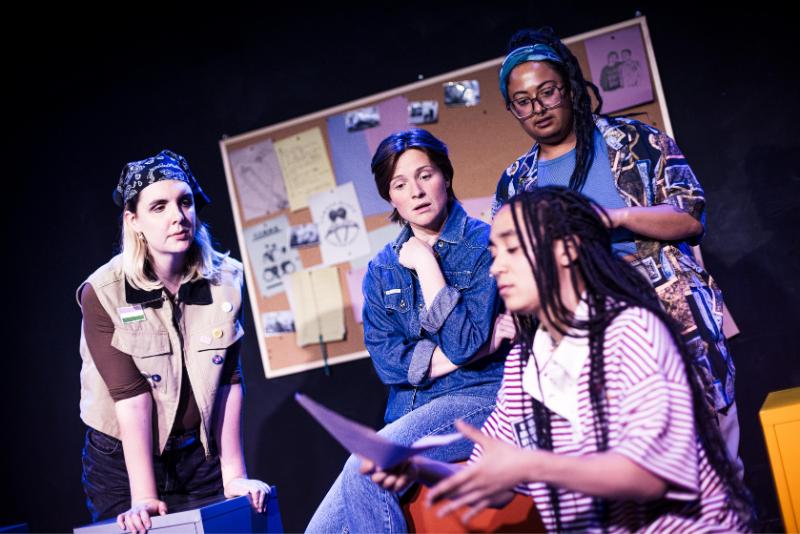
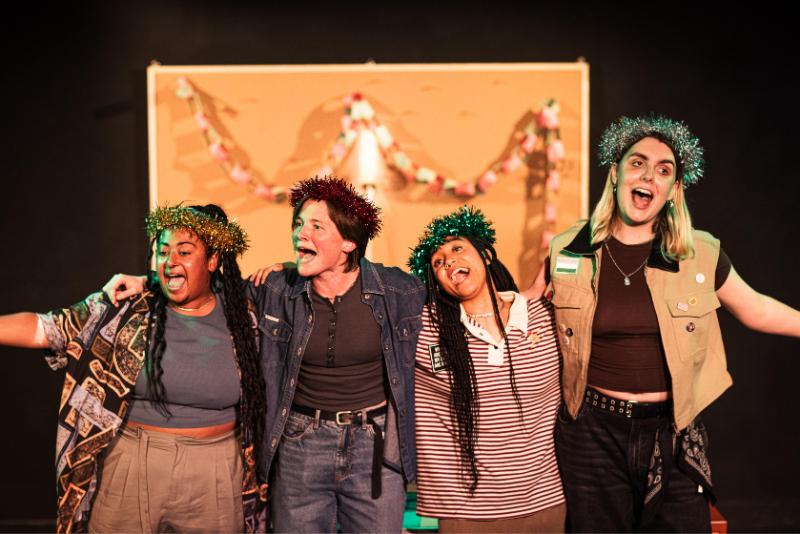
GRILLS discusses the long and lustrous history of dyke’s making space for themselves, whilst also asking what contemporary Queers should learn from this past and where we could go in the future.
Words by Chloe Christian & Olivia Dowd.
GRILLS will be performed at the Camden People’s Theatre from 4th June to 22nd June 2024. Tickets and more information can be found at https://cptheatre.co.uk/whatson/grills.
GRILLS is part of the Camden Roar, a theatre and performance festival celebrating 30 years of the Camden People’s Theatre – full programme and tickets at https://cptheatre.co.uk/festivals/camden-roar.








Comments