
 By
By 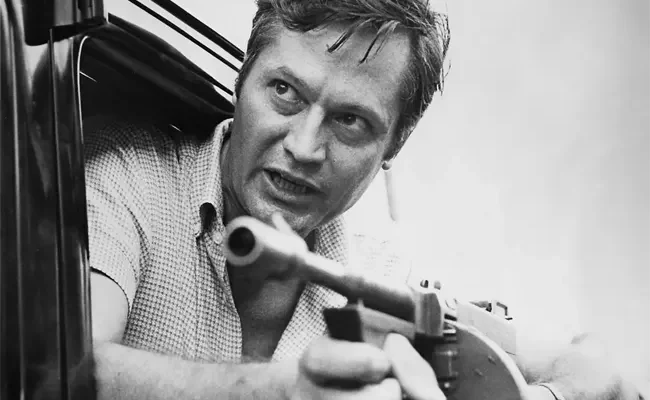
The recent passing of Roger Corman on May 9 marked the end of an era for Hollywood, but his profound influence on actors and filmmakers continues to resonate throughout the industry.
One remarkable testament to Corman’s impact came during the 1974 Academy Awards, where nearly every category saw either wins or nominations for graduates of the “Roger Corman film school”. These were individuals whom Corman had personally propelled into the industry or guided in their formative years.
Among the actors whose careers Corman helped shape, notable examples include Robert De Niro, whose early breakthrough came with Bloody Mama (1970); Sylvester Stallone, who gained recognition through Death Race 2000 (1975); and Pam Grier, whose talent shone in Women in Cages (1971).
Not limited to actors, Corman also played a crucial role in fostering directorial talents. Martin Scorsese, for instance, honed his skills under Corman’s guidance with the production of Boxcar Bertha (1972). Similarly, Peter Bogdanovich flourished under Corman’s mentorship, directing Targets (1968) early in his career.
Corman’s contributions extended beyond these renowned figures. He provided invaluable early-career opportunities to a diverse array of filmmakers, including Francis Ford Coppola, Jonathan Demme, James Cameron, Joe Dante, and Nicolas Roeg. Each of these directors went on to leave an indelible mark on cinema in their own right, owing a debt of gratitude to Corman for his support and mentorship.
Reflecting on his experience working with Corman on Boxcar Bertha, Scorsese once remarked, “I think I got paid scale, but it didn’t matter because basically, you were getting the chance to learn how to make a film… When you think about everyone who went through that University of Corman – it’s a remarkable impact he’s had on American cinema.”
Roger Corman – king of the B movies
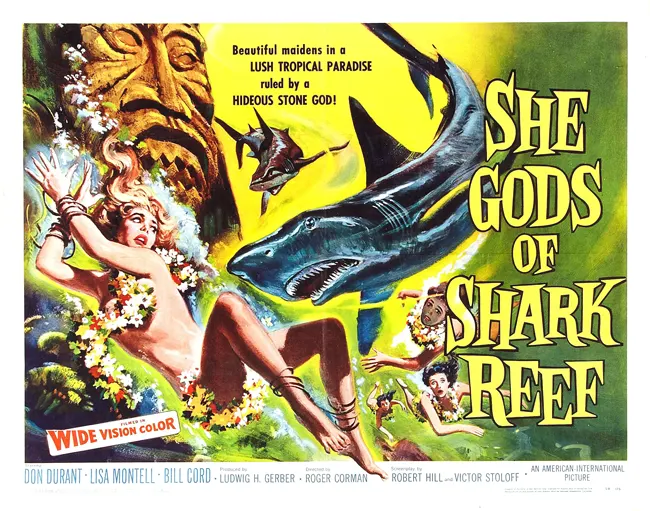
Throughout a career spanning over six decades, Corman cultivated a distinctive style that earned him the moniker “king of the B-movies.” His films were characterised by modest budgets, yet they captivated audiences with their low-budget special effects and attention-grabbing titles like She Gods of Shark Reef (1958) and Attack of the Crab Monsters (1957).
Born on April 5, 1926, in Detroit, Michigan, Corman had originally seemed destined to follow in his father’s footsteps, earning a degree in industrial engineering from Stanford University. Yet, after a brief stint at his first job as a graduate at US Electrical Motors in Los Angeles, Corman realised his passion lay in filmmaking. He swiftly transitioned to 20th Century Fox, securing a role as a messenger.
After ascending to the position of story reader at Fox, Corman parted ways with the studio when his idea for the Gregory Peck western The Gunfighter went uncredited. Subsequently, he ventured into independent production, churning out as many as nine films annually and amassing over 400 throughout his career. Despite their shoestring budgets, the majority of his productions proved to be lucrative ventures, grossing many times their production costs.

While Corman’s oeuvre predominantly leaned toward lowbrow genre fare, it occasionally garnered critical acclaim. Notably, between 1959 and 1964, he helmed a series of well-received adaptations of Edgar Allan Poe’s stories, with The Pit and the Pendulum (1961) standing out among them.
Additionally, works like the satirical horror Death Race 2000, Piranha, and The Little Shop of Horrors achieved cult status and later received high-budget remakes. Reflecting on their collaboration, Jack Nicholson quipped, “By mistake, Roger would actually make a good picture every once in a while. But I was never in it.”
Nicholson was just one of the many actors whose careers received a boost from Corman’s tutelage. Peter Fonda and Dennis Hopper starred alongside Nicholson in The Trip, Corman’s 1967 ode to counterculture, which provided the impetus for their seminal work, Easy Rider.
Other actors who crossed paths with Corman early in their careers include a young Sandra Bullock in the straight-to-video action adventure Fire on the Amazon and a pre-Star Trek William Shatner in Corman’s race-relations drama The Intruder.
Roger Corman on screen
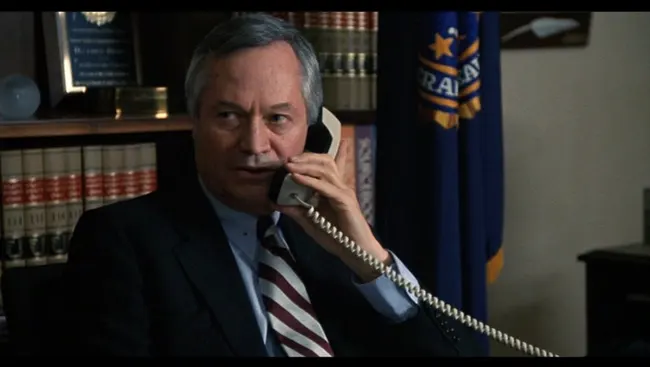
Occasionally, Corman graced the screen in acting roles, often for directors whom he had mentored. Notably, he portrayed a senator in Coppola’s The Godfather Part II and an FBI director in Demme’s The Silence of the Lambs. Most fittingly, he made a self-referential appearance in Scream 3 as a studio executive for “Stab 3,” a film-within-a-film paying homage to the low-budget shockers that had long been Corman’s signature.
Despite his towering stature in the industry, Corman remained modest about the films he created, acknowledging their lighthearted nature. “I don’t know if I would say I’m an artist,” he remarked in a 2011 interview with The Guardian’s Xan Brooks. “I would say that I’m a craftsman. I strive to practice my craft in the best possible manner. If, on occasion, something surpasses mere craftsmanship, then that’s wonderful. But it’s a rarity.”
Discover More
“The Pit and the Pendulum” Marks High Point In Roger Corman’s Foray Into the World of Poe

Roger Corman’s second adaptation of an Edgar Allan Poe story after 1960’s The Fall of the House of Usher is arguably the director’s best ever work.










Comments