
 By
By 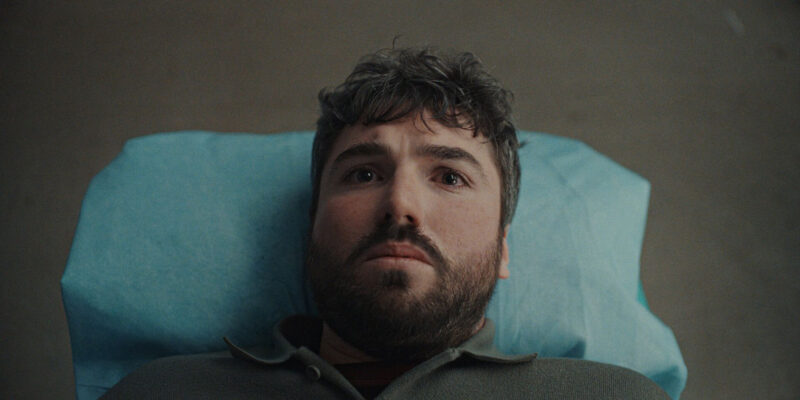
The most potent stories often sprout from the seeds of personal awkwardness. For director Alexander Saul and Oscar-nominated producer Rebecca Pruzan, their latest collaboration, Snipped, found its pulse in a moment of profound physical and cultural exposure. Now Oscar-qualified, this darkly comedic short navigates the razor-thin line between sacred ritual and the sheer absurdity of the human condition.
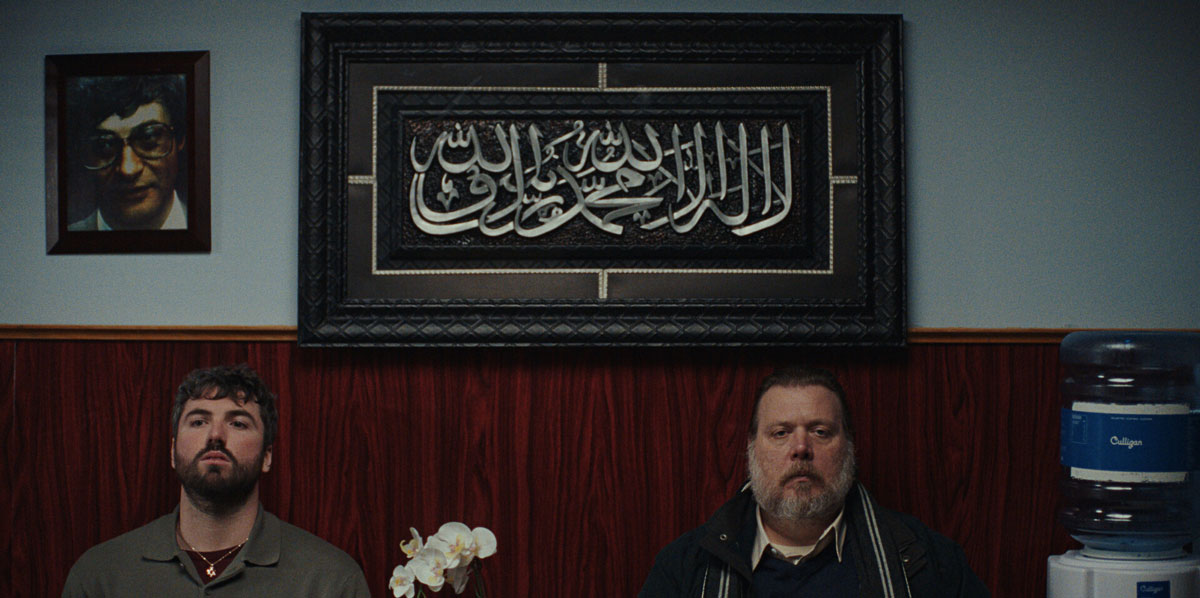
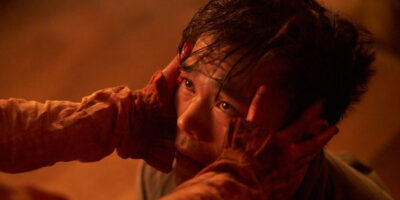
The film follows Adam, a Jewish convert, into a small Muslim clinic for a ritual circumcision. It is a setup that, in a lesser creator’s hands, might lean toward the polemic. Instead, Saul and Pruzan lean into the “cringe,” finding a deep, resonant humanity in a room where religious tension meets medical vulnerability.
For Saul, the decision to bring this story to the screen wasn’t born from a desire to make a statement, but from a need to process a whirlwind of conflicting emotions. The film is rooted in his own conversion to Judaism, a journey that led him to an unexpected setting for a life-altering procedure.
“The story began with something very intimate and slightly absurd,” Saul tells Top 10 Films. “I had just undergone a ritual circumcision as part of my conversion and felt a strange combination of fear, pride and exposure that I didn’t quite know how to process.”
When he recounted the experience to Pruzan, he wasn’t looking for a screenplay; he was simply sharing the “tense but laughing” reality of his afternoon. But the narrative potential was undeniable. “It was never meant to be confessional; it just felt necessary,” says Saul. “A sacred moment shared between people who, according to the world’s narrative, should fear each other, and yet we laughed. That contradiction became the spark.”
For Pruzan, the story’s potential hit her with the force of a lightning bolt during a mundane commute. The origin of Snipped didn’t happen in a writers’ room, but on a train in Copenhagen. “I asked why he wasn’t on his bike,” Pruzan recalls, “and he flushed a bit before admitting he’d just been circumcised, as part of his conversion to Judaism, at a Muslim clinic.”
As a producer, Pruzan recognised that the specific details — the location, the timing, the physical discomfort — pointed toward a much larger universal truth. It was a story about the lengths we go to belong.
“The mix of vulnerability, absurdity and honesty struck me immediately,” she says. “It captured something raw and profoundly human about faith, identity and belonging. I knew it was a story that had to be told, and I asked him to put everything else aside and write the script due to its immediate relevance.”
Navigating the “holy snip”
Balancing the weight of a religious rite with the levity of a medical mishap is a high-stakes gamble. In Snipped, Saul found that he didn’t have to manufacture the comedy; he simply had to observe it. The absurdity, he notes, was baked into the fabric of the real-world experience. “A deeply religious procedure, a vulnerable body, and then, an iPad with only Fruit Ninja available before the surgery,” Saul recounts with a wry grin. “It was impossible not to find it both funny and existentially strange.”
To ensure the film didn’t devolve into pure farce, Saul utilised a specific visual language to anchor the audience in the character’s internal world. “I wanted the film to inhabit that space where fear and humour coexist… We kept the camera close, focusing on faces and gestures, so the emotional truth could survive even the most absurd moments.” This intimate framing forces the viewer to sit with the protagonist’s discomfort, making the eventual laughter feel earned rather than mocking.
While the film is undeniably funny, it carries a sharp edge. Saul describes Snipped not as a plea for peace, but as a “provocation” — a challenge to the viewer’s preconceived notions of cultural friction. In a media landscape often dominated by images of sectarian strife, the film presents a radical alternative: mundane cooperation.
“I hope it makes people question why peaceful coexistence feels more surprising than conflict,” Saul explains. “The film isn’t trying to persuade anyone; it’s presenting another reality that already exists. Jews and Muslims live side by side every day, work together, laugh together… For me, Snipped is a small success story, a quiet provocation against the assumption that division is inevitable.”
Breaking down the walls
Pruzan believes the urgency of the film lies in its timing. As global polarisation reaches a fever pitch, Snipped arrives as a necessary reminder of our shared, often awkward, humanity. The film uses the lens of masculinity and religious identity to dismantle the idea that difference equals distance.
“We live in a time where difference is often framed as division. Snipped shows the opposite. That difference can be a bridge,” Pruzan says. She sees the film as a vital counter-narrative to the geopolitical climate of 2026. “The film speaks to coexistence, vulnerability and the absurdity of the walls we build between us. It’s a quiet, human story that challenges fear by showing empathy and humour instead of confrontation.”
By focusing on the most vulnerable of physical acts, the short film strips away the political armour, leaving the audience with a story that is as deeply personal as it is universally resonant.
Following the acclaim of his previous short Lovesick — which, like Snipped, was Oscar-qualified — Saul has refined his ability to mine heavy subjects for human warmth. While Lovesick delved into the delicate world of mental health, Snipped pushes Saul’s creative philosophy into new, more provocative territory.
“With Lovesick, I learned how to build honesty and vulnerability into comedy,” Saul notes. “With Snipped, I wanted to take that further, to let humour emerge from tension, not from punchlines. It taught me that absurdity can reveal humanity more effectively than realism sometimes can.” For Saul, filmmaking has become an intentional act of diplomacy: “Every film I make is, in some way, an exercise in trust between myself, the crew and the audience.”
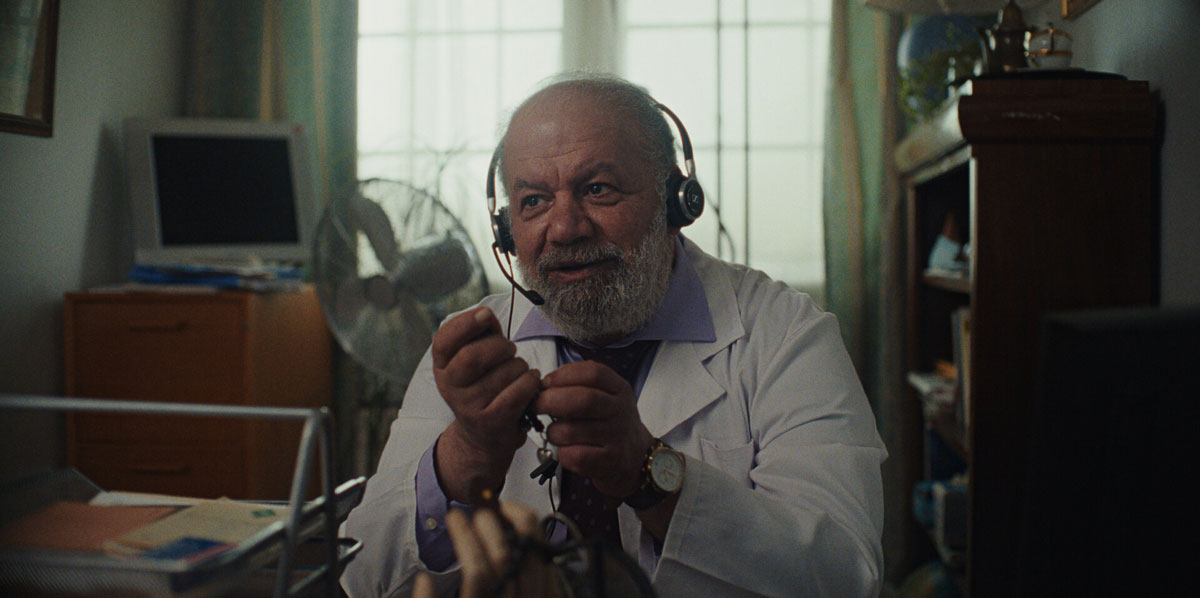
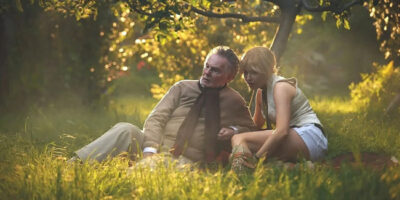
To anchor such a high-tension premise, Saul and Pruzan assembled a powerhouse cast of Danish talent, including Louis Bodnia Andersen as the apprehensive Adam and the legendary Nicolas Bro as his father. The chemistry between them provides the film’s emotional spine, turning a clinical procedure into a relatable family drama.
Saul’s approach to directing these heavyweights was rooted in presence over theory. “I wasn’t looking for imitation or method precision; I was looking for emotional truth,” he explains. “Louis brought a raw innocence that felt essential to Adam’s fear and courage. Nicolas grounded the story with warmth and quiet authority.” Because the film required the actors to be literally and figuratively exposed, the set became a space where humour was a tool for safety. “On set, laughter became a form of trust. Even in the heaviest moments, we allowed humour to circulate, and that sense of ease is what makes the film feel human rather than symbolic.”
The producer’s perspective: precision and tone
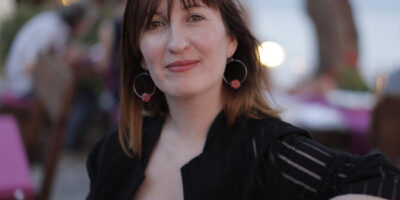
Pruzan, whose track record includes the Oscar-nominated On My Mind and the recent Ivalu, Saul represents a distinct “modern” wave of Danish cinema. “Alexander has a unique ability to approach deeply personal material. He’s part of a new generation of Danish filmmakers who aren’t afraid to merge vulnerability with irony.”
She continues, “What stood out most to me is his precision. Alexander observes people with great empathy, yet he’s fearless in confronting cultural and emotional taboos. His voice feels distinctly modern: warm, curious and unafraid to laugh at life’s contradictions. I never get tired of laughing with him.”
However, bringing a story involving ritual circumcision and interfaith dynamics to the screen required more than just laughter; it required surgical precision in its production. Pruzan was acutely aware of the “fine line” the film had to walk.
“Tone was everything. The story walks a fine line between absurd humour and deep emotion, and it was vital that we never lost sight of either. We worked closely with political consultants and members of both Jewish and Muslim communities to ensure the film felt truthful.”
Despite being a non-commercial, workshop-based production, the project’s authenticity was bolstered by a team driven by passion rather than profit. “Everyone was there out of genuine belief in the story,” Pruzan reflects. “That authenticity gave Snipped its sensitivity and soul.”
As the film makes its way through the international festival circuit and secures its place on the Oscar-qualified shortlist, its impact is being felt far beyond the confines of the screening room. What began as a vulnerable conversation on a Danish train has blossomed into a cinematic bridge, proving that the most specific, personal stories often hold the most universal truths.
For Pruzan, the film’s growing reach isn’t just a win for the production team, it’s a victory for a more nuanced kind of storytelling. As the film prepares for the next stage of its journey toward the 98th Academy Awards, her hopes for its legacy remain rooted in the simple, profound humanity that sparked the project in the first place.
“If audiences walk away with only one feeling or thought after watching Snipped, I hope it’s this: that Jews and Muslims already coexist. Even amid political tensions,” Pruzan concludes. “That our similarities deserve to be spoken about more than our differences. And that even in the most sensitive situations, humour can open a door to recognition, empathy and trust.”
By stripping away the layers of geopolitical noise and focusing on a single, shared moment of human vulnerability, Snipped doesn’t just ask us to look, it asks us to laugh, to recognise ourselves in “the other,” and perhaps most importantly, to see that the door to coexistence has been open all along.
Discover more interviews on Top 10 Films:
Interview: Aaron Blaise On Grief, Nature And The Hand-Drawn Heart Of “Snow Bear”
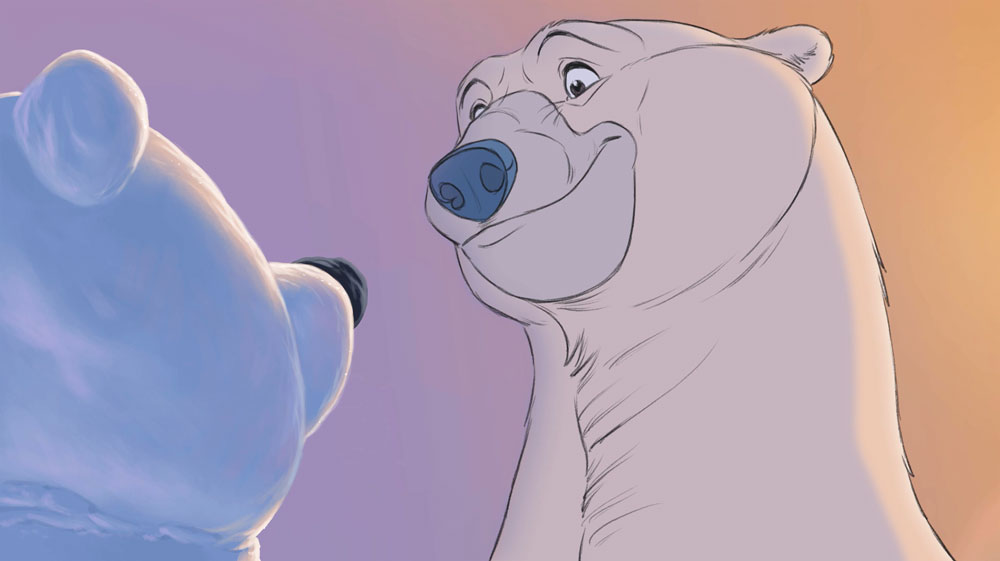
Director and animator Aaron Blaise discusses the personal roots of Snow Bear, hand-drawn storytelling, and why empathy and nature sit at the heart of his Oscar-shortlisted film.




I think it’s wonderful when adult men can choose for themselves to be circumcised.