
 By
By 
Sylvester Stallone’s journey to bringing Rocky to life is one of those rare Hollywood stories where the myth feels almost smaller than the truth. Long before he was a global icon, Stallone was a kid in the cinema staring up at Steve Reeves in Hercules. It was a moment he says changed everything.
“I was very lucky, in the golden age of films, when dialogue was important. But the dialogue didn’t move me as much as the actual physical embodiment of overcoming odds,” he recalled at the Toronto Film Festival. That idea — the physical struggle, the ordinary man pushed into extraordinary circumstances — lodged itself deep.
Comic books added fuel. “Coming to the rescue, not so much as a superhero, just as a guy who was forced to,” he said of the fantasies he built in his head. These early influences didn’t just shape Stallone’s taste; they shaped Rocky Balboa himself, a character born from the quiet desperation of real life.
- Sylvester Stallone’s Inspirational Journey To Making “Rocky” A Reality
- Sylvester Stallone Appeals To Irwin Winkler For “Rocky” Rights
- Sylvester Stallone Hits Out At Producer Irwin Winkler Again Over “Rocky” Rights
After college, Stallone took a job as a cinema usher — not for the paycheque, but for the education. He watched films “over and over and over,” studying the rhythms, the scenes, the magic. “You get to see the magic. You realise, here comes that scene again. And then I said, I can do better than that. And then I realised I couldn’t, okay,” he joked.
But he kept going.

The triumphant scene in Sylvester Stallone classic, Rocky.
That persistence became his screenwriting school. He wrote what was familiar: the people on the margins, the dreamers who never quite fit. “I just wrote about what I knew. I was writing about this little kind of mentally challenged guy who happened to have a lot of heart,” Stallone said of Rocky’s earliest incarnation.
The character evolved into a Philadelphia underdog who wasn’t chasing glory, just dignity. “I wanted to write a movie about a guy who says ‘I’m not great at all, never will be. I fight great fighters. But I just want the opportunity to go the distance,’” Stallone explained. That simple, profound ambition became the emotional core of Rocky.
But Hollywood didn’t see it. Stallone remembers the resistance clearly: “Nobody wanted to make it. It was my best writing too.” Producers wanted big stars — Burt Reynolds, James Caan, Ryan O’Neal — anyone but the unknown writer insisting he play the lead.
Stallone refused to sell the script without starring, even when he had just $106 in the bank and was offered $300,000 for the rights. He knew Rocky wasn’t a role to be performed; it was a life to be lived.
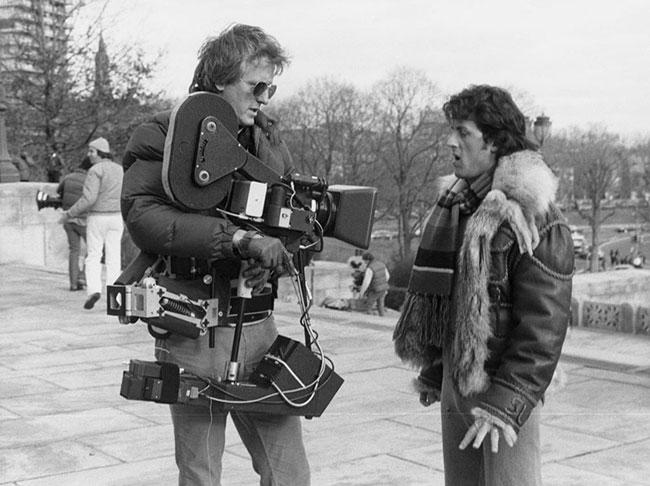
Sylvester Stallone on Rocky II set with Steadicam inventor Garrett Brown in 1978 | Photo: Garrett Brown
That gamble paid off.
Rocky won three Oscars, launched a franchise worth over a billion dollars, and cemented Stallone’s place in film history. Yet he remains disarmingly humble about his craft. “I didn’t have the bones to be a Shakespearean actor. It’s important as an artist to know what your strengths are, but more important to know your weaknesses,” he said.
Across 50 films and decades of reinvention, Stallone’s greatest strength has always been clarity: he knew who Rocky was, what he represented, and why audiences needed him. Rocky wasn’t a superhero. He was a man who kept getting up. And Stallone, against every odd, did the same.
Discover more on Top 10 Films
10 Great Sylvester Stallone Films Not Called “Rambo” Or “Rocky”
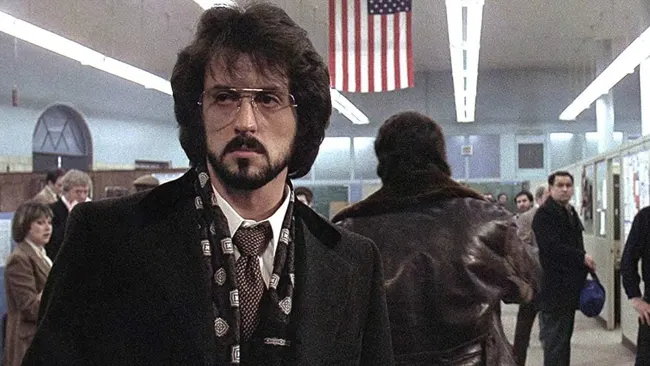
What is the best Stallone movie – Rambo or Rocky? In this top 10 we put those two classics (and their franchises) aside for a moment and look at the best of the rest.










Comments