
 By
By 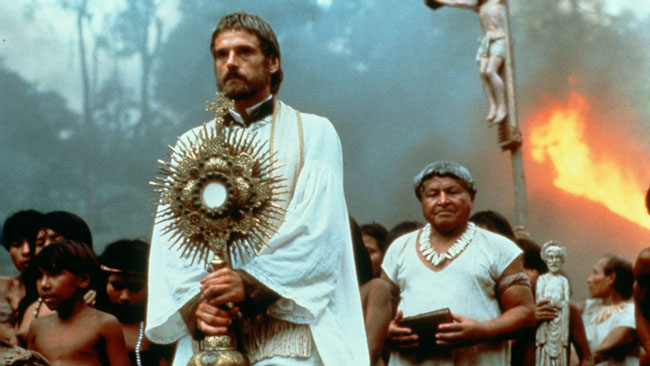
Robert De Niro and Jeremy Irons’ collaboration on The Mission is now remembered as one of cinema’s great pairings — a clash of temperaments that forged not only two extraordinary performances but, ultimately, a lifelong friendship. Yet when filming began in 1985, the atmosphere between the two actors was anything but harmonious.
Irons has never shied away from describing just how frosty things were. Speaking to Des O’Connor in the 1990s, he recalled: “He really didn’t want me to be there. And I knew he really didn’t want me there. And [because of that] we hardly talked to each other in the first week even though we were playing scenes together.”
That tension wasn’t imagined. As Irons later told IndieWire, De Niro had hoped for a dynamic similar to the one Roland Joffé achieved in The Killing Fields: “[He] had just done The Killing Fields, with Sam Waterston and Dith Pran, an actor and a real person, and Bob wanted that relationship between his character [the slaver] and the Jesuit priest. So when I turned up in Colombia for filming he was absolutely furious, because he found himself opposite an actor – and worse, an English actor. I remember Robert Duvall saying to Glenn Close, with whom I’d just done a play on Broadway, ‘How can you trust a guy that talks like that?’ And Bob felt much the same, I think.”
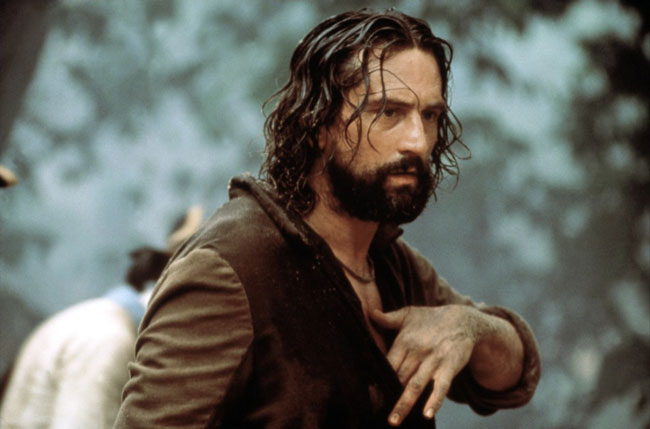
For De Niro, a committed method performer, the friction became fuel. Irons admitted as much to O’Connor: “Because the characters really hated each other or didn’t understand each other. Because he’s a method actor, he used that, and the director encouraged him to do that.” On screen, that emotional distance is electric, and helps develop the uneasy bond between Mendoza and Father Gabriel which becomes one of the film’s great strengths.
But off screen, the tension simmered until it finally boiled over. Irons remembers the breaking point vividly: “Then we had a terrible row in the make-up bus. No holds barred.” With both men’s partners — Sinead Cusack and Toukie Smith — present during the blow‑up, it fell to them to broker peace. Cusack suggested a conciliatory dinner; Smith cooked a spaghetti Bolognese feast. “And when Bob got back we had this splendid evening and he has remained one of my greatest friends ever since.”
That reconciliation proved vital. The Mission — a sweeping historical drama about Jesuit missionaries in 18th‑century South America — demanded emotional intensity and trust between its leads. The film went on to win the Palme d’Or at Cannes and earn seven Oscar nominations, including Best Picture. Its production was as ambitious as its themes: shot across Colombia, Argentina, Brazil and Paraguay, with De Niro requiring bodyguards due to threats from the Medellín Cartel, the film was a logistical and artistic undertaking of rare scale.
Though critics were divided — Vincent Canby of The New York Times was notably unimpressed — De Niro himself remained deeply proud of the project. “I thought it was a really wonderful, meaningful story […] It was an amazing experience and I liked Roland Joffé a lot… I thought it was a wonderful movie.”
In hindsight, the early hostility between De Niro and Irons seems almost essential to what makes The Mission endure. Their performances — one turbulent, one serene — mirror the journey they took together: from suspicion to confrontation to mutual respect. What began as a clash of wills became, improbably, the foundation of a lasting friendship and one of the most memorable actor pairings of 1980s cinema.
Discover more on Top 10 Films
Morgan Freeman’s Breakout Turn In “Street Smart”: The Role He Loved But Refused To Repeat

Morgan Freeman’s turn as Fast Black in Street Smart didn’t just earn him his first Oscar nomination — it reshaped his entire career. We explore why this fierce, stylish, unpredictable character remains one of Freeman’s favourite roles, and how it set the stage for the Hollywood legend he became.







Comments