
 By
By 
Nearly half a century after its release, Steven Spielberg’s Close Encounters of the Third Kind feels uncannily tuned to the cultural frequency of 2026. Caryn James argues in her BBC Culture piece that the film “taps into anxieties about the US government hiding UFO information from the public” — a line that could just as easily describe today’s headlines. With Disclosure Day arriving in cinemas, Close Encounters isn’t just a spiritual ancestor; it’s the key to understanding why Spielberg’s new film resonates so strongly now.
James notes that Disclosure Day is “not a sequel to Close Encounters (sorry, internet),” yet the connection is unmistakable. Emily Blunt has described the new film as forming “a third act” with Close Encounters and E.T., and Spielberg himself has leaned into the thematic lineage. His comment in the trailer — “I’m even more inclined now than I was when I made Close Encounters to really believe that we’re not the only intelligent civilisation in the Universe” — feels like a mission statement for both films.
At the heart of James’ argument is the idea that Close Encounters of the Third Kind has evolved from a sci‑fi spectacle into a parable about truth, secrecy, and institutional mistrust. She writes that the film “becomes an everyman’s attempt to find the truth in the face of massive government secrecy and lies.” That line lands harder today than it did in 1977. Back then, Watergate was the cultural backdrop; now, it’s decades of classified UAP reports, Congressional hearings, and a public increasingly convinced that official explanations are anything but.
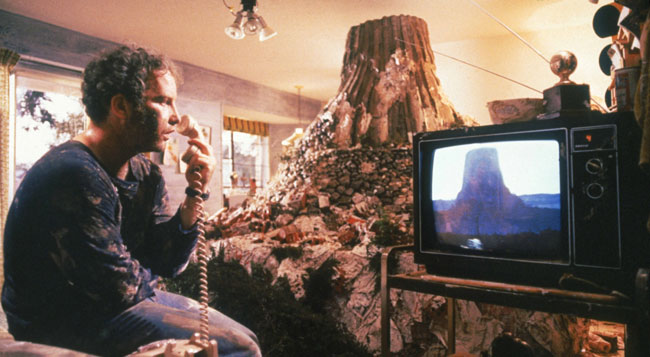
James points out that the conspiracy element was baked in from the start — Spielberg originally pitched the film as “UFOs and Watergate.” Even after the story shifted toward family drama, the paranoia remained: military cover stories, falsified news reports, tranquilised animals staged as chemical‑spill casualties. The film’s most iconic images — the mashed‑potato Devil’s Tower, the glowing mothership, the five‑note musical greeting — are inseparable from its portrait of a government determined to hide what it knows.
That’s where the film’s relevance spikes. As James notes, “those theories go back to the legendary supposed crash of a UFO in Roswell… and over the years have only intensified.” The Pentagon’s recent trickle of UAP disclosures, the 2025 Wall Street Journal revelations about disinformation programs, and the ongoing sense that the public is being told only part of the story all echo the world Spielberg imagined.

Close Encounters of the Third Kind – Steven Spielberg (1979)
Disclosure Day picks up that thread directly. James describes Josh O’Connor’s character, Daniel, as a whistleblower pursued by a clandestine agency — a modern analogue to the hunted truth‑seekers of 1970s thrillers. One line she quotes from the film’s trailers could double as a thesis for both movies: “This 79‑year terror campaign of obfuscation, lies and cover‑up has to end!”
What makes Close Encounters of the Third Kind so relevant today isn’t just its imagery or its optimism about alien contact. It’s the way it frames the search for truth as a personal, almost spiritual quest — one that requires defying institutions, trusting your instincts, and refusing to accept the official story when it doesn’t match what you’ve seen with your own eyes.
Spielberg once imagined a world where the government hid the truth about extraterrestrial life. In 2026, audiences are wondering whether that world was fantasy at all.
Discover more on Top 10 Films
Why Are There Different Versions Of “Close Encounters Of The Third Kind”?
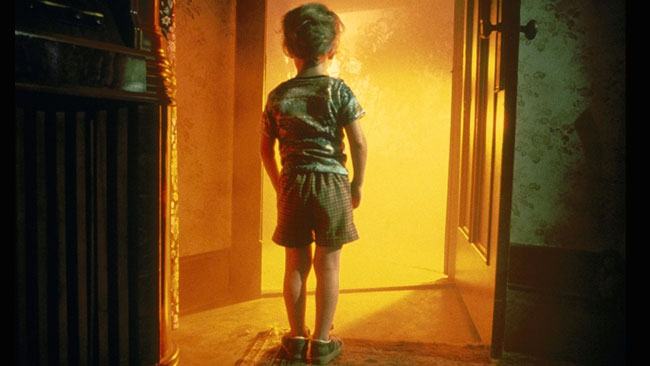
The lowdown on why there are three versions of Close Encounters of the Third Kind and why the 1998 anniversary edition is Steven Spielberg’s definitive edition.













Comments