
 By
By 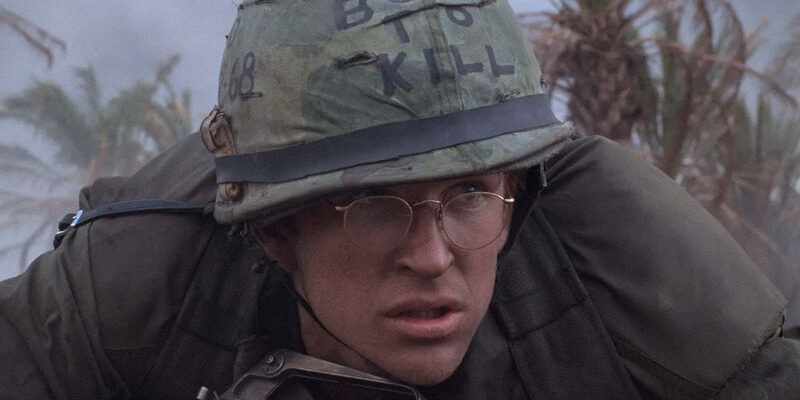
When a script arrives through a mail slot in New York City, it’s usually just another Tuesday for a working actor. But when the return address implies a certain perfectionist genius living in the English countryside, the world shifts on its axis. Matthew Modine, the man who would become the face of the Vietnam War for a generation, remembers the moment his life changed with a characteristic blend of humility and awe.
The invitation to join one of the greatest war films ever made didn’t come with a Hollywood fanfare; it came with a polite, almost bashful note. Modine said in 2017: “I received the script through my mail slot in New York with a letter from Stanley introducing himself: ‘Hi, my name is Stanley Kubrick. I’ve got this film I’m making about the Vietnam war and I wonder if you’d consider participating.’ He didn’t say it was for the part of Private Joker, and I’d finished a movie just previous to this called Birdy. So when I read the script, I thought maybe he was asking me to audition for Private Pyle, because of the fragility of that character. But I was never sure, because Stanley never said.”
Modine didn’t just find his own way into the production; he became an unofficial casting director, paving the way for one of the most haunting physical transformations in film history. “I suggested Vincent D’Onofrio join the cast. I thought Vince was an amazing actor, and I promised to call him if anything came up. I got to London, and Stanley said, ‘You know, we have a terrific cast, but I don’t have anybody to play Gomer Pyle.’ I said, ‘I’ve got somebody. He’s not fat and he’s not southern, but he’s a great actor.’ So Vincent auditioned and Stanley said, ‘He’s perfect – will he gain the weight?’ I said, ‘That’s up to you guys.'” D’Onofrio famously went on to gain 31kg (5 stone), a sacrifice that anchored the film’s first act in a devastating reality.

While many Vietnam epics headed to the humid jungles of the Philippines or Thailand, Kubrick stayed true to his reputation for staying close to home. The jungles of Full Metal Jacket were actually the decaying industrial remains of East London.
“We shot the battle scenes at Beckton gasworks, London, near the Isle of Dogs. We did the Vietnam scenes first, before bootcamp, but they started to overlap, and there was maybe a month where I was wearing a wig, because my head had to be shaved. I was never certain why we shot the film backwards, but I knew we had to be out of Beckton gasworks by a certain date because it was scheduled for demolition.”
This logistical quirk ended up giving the film its most striking visual asset: a stark, urban landscape that felt eerily prophetic. “It would have been a completely different film if we’d gone to the jungles and shot Vietnam that way. The street fighting, I think, is one of the things that makes the film timeless. It looks like Afghanistan or Iraq today.”
The moral core of the machine
Beyond the technical wizardry and the backwards shooting schedule, Modine remains struck by what Kubrick was trying to say about the human soul under pressure. It wasn’t about the politics of the 1960s; it was about the fundamental rewiring of a person.
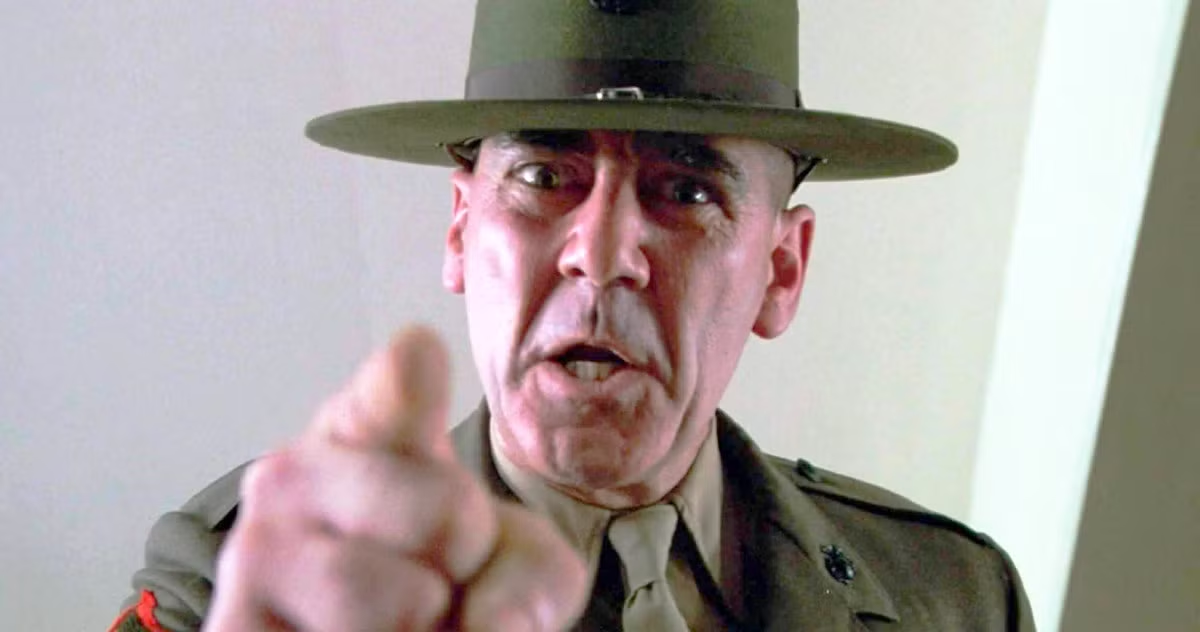
“Stanley was really making a film about the effects of war – what happens when young men who’ve been taught their whole lives to respect life then become killers. It’s testament to his direction that you have a character that might normally be considered a bad guy – the drill instructor, played by R. Lee Ermey – and yet nobody cheers, nobody’s happy, when the drill instructor gets shot and killed, because you know that guy was trying to teach those guys to work together.”
Modine still carries a bit of a grudge on behalf of his co-star, Ermey, whose performance as the terrifying Sergeant Hartman became an instant cultural touchstone.
“Leon [Vitali, casting director] worked for hundreds of hours with Lee to turn him into that character. I mean, Lee was a drill instructor, so there was a natural ability, but he didn’t have the training. Had Lou Gossett Jr not won the Oscar for An Officer and a Gentleman, Lee would have won for that performance. But the way the Academy works is, ‘Oh, we already gave it to a guy who played a drill instructor. Let’s give it to somebody else.'”
Decades later, Modine’s recollections serve as a reminder that Full Metal Jacket wasn’t just a movie, it was a gruelling, backward-filmed, gasworks-set experiment in the endurance of the human spirit.
Discover more behind the scenes stories on Top 10 Films
Malcolm McDowell On The “Psychological Violence” Of “A Clockwork Orange”

From a cricket bag to the National Film Registry, the star of Stanley Kubrick’s dystopian masterpiece recounts the gruelling six-month shoot that defined his career.








Comments