
 By
By 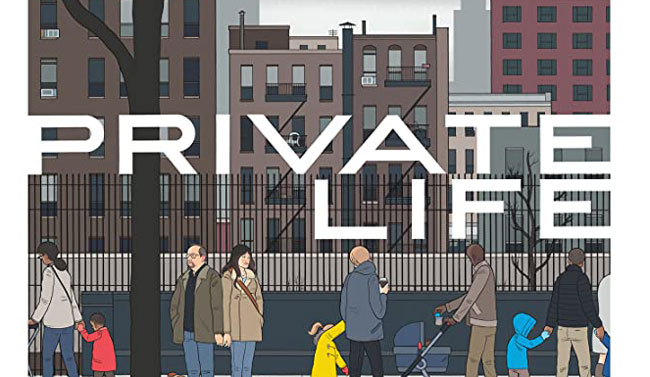
The issue of conceiving a child through assisted reproductive technologies (ART), particularly methods such as in vitro fertilisation, has long remained in the shadows, considered either too intimate to discuss or portrayed in cinema almost exclusively through the lens of science fiction.
However, in recent years, directors have increasingly turned to this subject as a profound psychological drama, exploring not so much the technical side of the issue as the fragility of the human psyche. One of the most striking, honest and frighteningly realistic examples of this transformation is Tamara Jenkins’ film Private Life.
Realism versus romanticisation
Unlike many Hollywood rom-coms, where pregnancy happens “as if by magic” after a single optimistic cut, Private Life immerses the viewer in the gruelling routine of reproductive medicine. The main characters – Richard and Rachel – are a couple of intellectuals from New York, both in their forties. Their lives, once filled with creativity and socialising, have turned into an endless, romance-free cycle of schedules, hormone injections, punctures and agonising, almost painful waiting for results.
The director masterfully highlights the contrast between the intimate goal – the creation of new life – and the utterly impersonal, mechanised process of achieving it within a clinical setting.

Key aspects of ART shown in the film:
- Psychological pressure and ‘tunnel vision’: The film vividly demonstrates how the quest to conceive a child becomes the sole purpose of existence, supplanting all other interests. This state of ‘tunnel vision’ leads to social isolation: the protagonists find it difficult to socialise with friends who have children, and they are haunted by hidden envy and feelings of inadequacy. Ultimately, this puts their marriage, financial stability and basic sense of happiness at risk.
- Medical accuracy and intrusion into private life: The viewer sees the unvarnished reality of the process – from the physical discomfort of ovarian hyperstimulation to the emotional devastation following yet another failed attempt. The director emphasises how medicine literally intrudes on the couple’s intimate life: sex ceases to be an act of intimacy and becomes a strictly regulated procedure, whilst the characters’ bodies are transformed into objects for manipulation. This robs them of any sense of control over their own lives.
- Ethics and the burden of donation: When the couple’s own biological resources are completely exhausted, the plot moves on to the most painful and legally complex stage – the procedure of IVF with egg donation. The involvement of a third person in starting a family radically changes the dynamics of the relationship, turning the couple’s intimate secret into a collective ordeal. The emergence of their niece Sadie as a potential egg donor brings to the surface layers of hidden family conflicts, long-standing grievances and unspoken obligations. In this context, the film explores not only physical genetic kinship, but also the enormous moral burden that falls on the young donor’s shoulders. Sadie finds herself in a complex psychological trap: she is torn between a sincere desire to help her beloved relatives and the sudden realisation of the immense, irreversible responsibility for another person’s fate that is being placed upon her. The film captures in detail moments of doubt, pressure from the older generation, and that inevitable awkwardness that arises when the gift of life becomes the subject of family negotiations.
The social significance of the theme in cinema
Films such as Private Life fulfil a critically important function – they destigmatise the topic of infertility, bringing it out of the realm of shameful silence and into the space of public dialogue. For a long time, the popular perception of ART was that it was something ‘artificial’ or even shameful. Contemporary cinema shifts the focus from technology to human resilience, showing that the path through test tubes requires no less courage than natural parenthood.
Other notable films on the subject:
- “Gattaca” (1997): A classic that explores the long-term consequences of genetic selection. The film poses an uncomfortable question: where does medicine that corrects defects end, and where does eugenics that creates ‘perfect’ people, deprived of the right to chance, begin?
- ‘ “The Kids Are All Right” (2010): The film focuses on the psychological consequences of anonymous donation. It explores how the appearance of a biological father in the lives of now-adult children changes the family structure and forces a redefinition of the concepts of “parent” and “kinship”.
- “The Handmaid’s Tale” (TV series): Despite its dystopian genre, the series ruthlessly exploits the fear of a global loss of reproductive function. It takes the idea of turning childbirth into a commodity to the extreme, forcing us to reflect on a woman’s right to control her own body in a world where fertility has become the supreme value.
Films about reproductive medicine today are no longer merely dry accounts of doctors and laboratory successes. They have outgrown the format of educational narratives, evolving into a profound, and at times emotionally draining, exploration of human nature itself: what it is that binds us together as a family, and what colossal sacrifices – from emptying bank accounts to ethical compromises with one’s own conscience – a person is prepared to make for the sake of continuing the family line in a technologised world. Private Life becomes here not merely a drama, but a mirror reflecting an uncomfortable truth: modern medicine is capable of offering hope, yet it also takes away the right to spontaneity, transforming intimacy into a strictly regimented schedule.
This journey demands an unprecedented level of honesty from partners, where each new cycle becomes a test of their union’s strength. The intrusion of medical protocols inevitably leads to an internal deconstruction of their identities: the film’s protagonists are forced to literally ‘reassemble’ themselves, abandoning their former plans and dreams in favour of a single biological goal. Such emotional scars are rarely mentioned in clinics’ marketing materials, where success is measured solely by percentages on paper, rather than the psychological cost. Ultimately, the film emphasises that true family unity is born not of a sterile biological coincidence, but of the ability of two people to navigate a series of disappointments together, maintaining their humanity and mutual support even when science is powerless. True kinship here is defined not by genetics, but by a shared history of struggle and a willingness to stand by one another in a state of absolute vulnerability.
FAQ: Frequently asked questions about reproductive medicine in film and life
1. How accurately do modern films portray the IVF (in vitro fertilisation) procedure? In high-quality dramas, such as Private Life, the accuracy of the process is very high, including the depiction of the side effects of hormone therapy and the couple’s psychological state. However, commercial films often omit the length of preparation (which can take years) and the low success rate on the first attempt. In reality, the probability of having a baby after a single IVF cycle averages 30–40 per cent, and cinema often embellishes these statistics to create a ‘happy ending’.
2. Why has the theme of donation become a central conflict in many films? Donation (of sperm or eggs) creates a ‘love triangle’ that is ideal for cinematic drama. It introduces an outsider into the intimate sphere of the family, allowing directors to explore themes of biological identity, a child’s right to know their origins, and parents’ fear of losing their exclusive bond with their baby.
3. Are there films that depict the risks and downsides of reproductive technologies? Yes, there is a whole body of documentary and fictional work that raises questions about the risks of multiple pregnancies (which often arise with ART), the mental health of surrogate mothers, and the ethics of the commercialisation of childbearing. In feature films, this is often presented through the psychological thriller genre, where technology becomes a tool for manipulation.
4. Which ethical issues are most frequently the subject of on-screen debate? The most pressing questions remain:
- Does a child have an unconditional right to know their biological donor parent?
- To what extent is it acceptable to use ‘pre-implantation diagnosis’ to select the characteristics of a future child?
- Where does the line lie between a healthy desire to become a parent and a dangerous obsession that destroys one’s personality and relationships?
5. Does watching such films really help people facing infertility? Specialists in reproductive psychology note that realistic films serve as a form of group therapy. They help couples to validate their feelings – anger, despair, envy and exhaustion. Seeing characters in a similar situation on screen, people stop feeling ‘broken’ and are given the opportunity to experience their emotions within the safe space of a cinema.















Comments