
 By
By Giallo… The Italian for ‘yellow’, these violent, highly sexualised and often brilliantly inventive whodunit thrillers exploded on to the international cinema scene in the early 1970s, enjoying a brief but incredibly prolific heyday before going the same way as the spaghetti western, poliziesco and innumerable other Italian cinema fads.
Deriving their name from the yellow-jacketed covers characteristic of detective novels in 1920s Italy, these Grand Guignol whodunit thrillers have made their mark on filmmakers as diverse as Martin Scorsese, Quentin Tarantino, Pascal Laugier and James Wan, but remain something of a niche interest among the filmgoing public at large.
“Giallo – violent, highly sexualised and often brilliantly inventive whodunit thrillers exploded on to the international cinema scene in the early 1970s, enjoying a brief but incredibly prolific heyday before going the same way as the spaghetti western, poliziesco and innumerable other Italian cinema fads.”
With this quickfire guide, my aim is to put together a list of gialli that provide a comprehensive introduction for those new to the genre. They are not by any stretch of the imagination the only gialli worth seeing or even the ten “best” gialli, and I anticipate no small degree of disagreement over my choices.
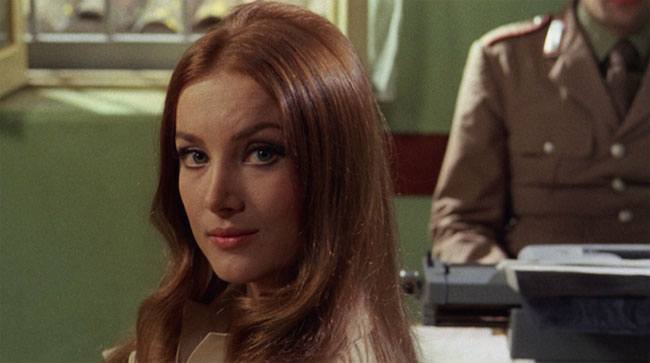
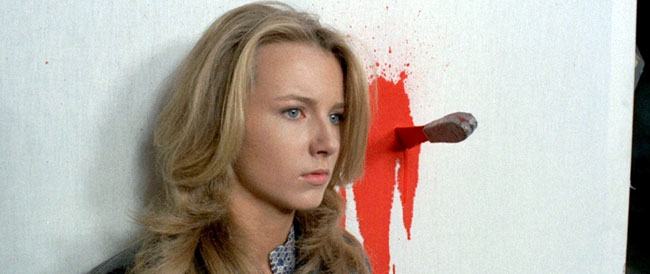
Barbara Bouchet in Lucio Fulci’s Don’t Torture A Duckling (1972).
These films are, however, among the most accessible to newcomers and also readily available on both sides of the Atlantic. They may not be my ten personal favourites (though I suspect that, if I were to compile such a list, the results wouldn’t differ too radically from this one), but they are all worth watching and will hopefully provide newcomers with a broad taste of the exotic delights that await them should they decide to delve deeper into this unique body of films.
Letícia Román in The Girl Who Knew Too Much (1963).
I’ve decided to rank these films chronologically. The giallo genre evolved considerably over its lifespan, and working through it in order allows for a comprehensive exploration of its various tropes and trends.
The Girl Who Knew Too Much
Dir. Bava (1963)

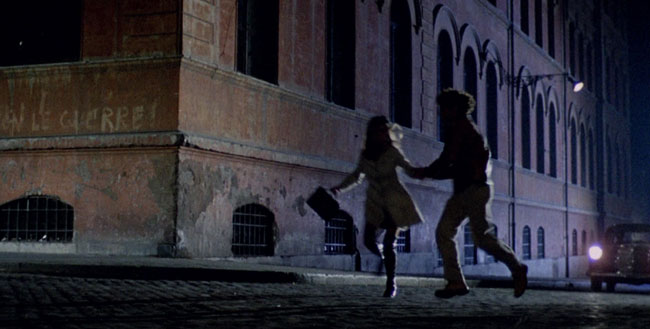
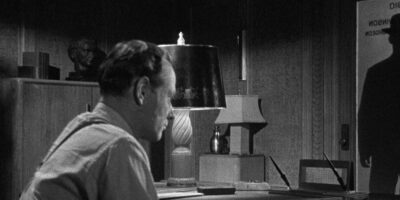
While there remains some disagreement as to the point at which the giallo boom ended, it’s broadly agreed that the genre itself began in 1963 with Mario Bava’s playful and decidedly Hitchcockian tale of a young American tourist, Nora Davis (Letícia Román), who, while visiting her invalided aunt in Rome, inadvertently becomes embroiled in a series of murders perpetrated by the notorious “Alphabet Killer”.
The only black and white film in this list, The Girl Who Knew Too Much looks sumptuous, and makes up for its lack of overt displays of violence and a high body count with plenty of tension and a delightful sense of whimsy — the omnipresent male narrator, a highly unusual touch for a giallo, frequently makes wry comments about Nora’s state of mind.
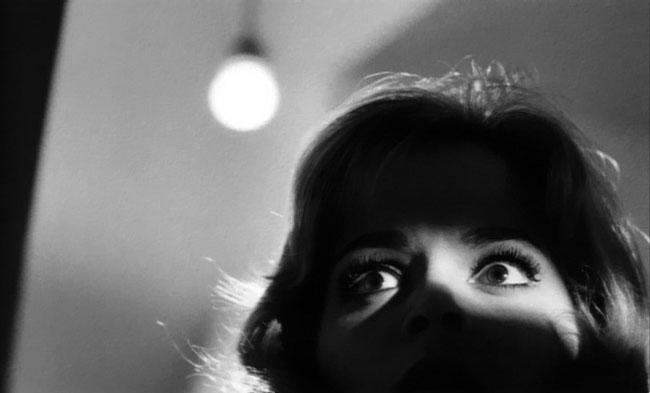
The film also shows that, even at this embryonic stage, the giallo had a strong sense of self-awareness — Nora is introduced to us reading a giallo paperback, and her obsession with murder mysteries is not only a frequent source of consternation among her acquaintances but also proves invaluable in allowing her to solve the mystery. American and Italian horror staple John Saxon plays the love interest — a rather dashing figure who ends up being the butt of some of the film’s best jokes.
An alternate North American cut, retitled Evil Eye, sees the film feature an entirely different score and a number of additional scenes of slapstick comedy.
Blood And Black Lace
Dir. Bava (1964)

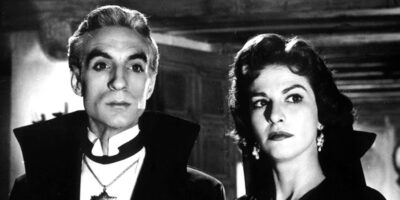
If The Girl Who Knew Too Much crystallised the whodunit framework of the genre, Bava’s next giallo, released a year later, was responsible for establishing much of its visual style and, just as importantly, ushering in one of the most enduring aspects of these films: the body count.
Exploding on to the screen in baroque Technicolor, Bava’s second giallo is an audio-visual treat, combining lavish primary hues and exquisite production design with a memorable jazzy score by Carlo Rusticelli.
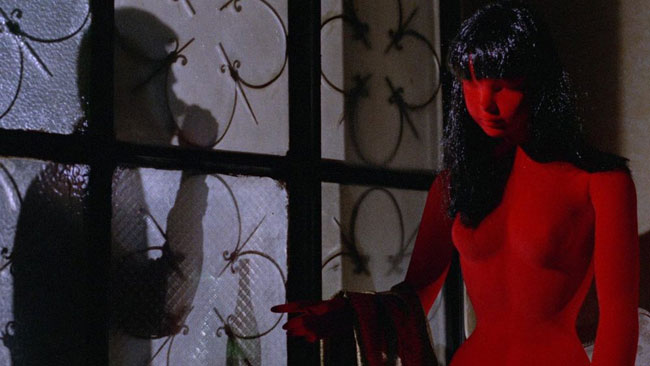
The plot, centring around a series of murders taking place in and around a fashion house, may not give us a sympathetic heroine like Nora Davis in the previous film, but instead assembles an entire roster of sinister, suspicious and in some cases downright unpleasant “victims” to be offed in an array of creative ways.
Perhaps the most enduring image of the giallo, that of the masked killer with his black gloves, trenchcoat and hat, makes its debut here — a ruthless, brutal and wickedly inventive assassin who dispatches the rich and sleazy with gleeful abandon.
The Bird With The Crystal Plumage
Dir. Argento (1970)

Bava may have birthed the giallo, but it was a young first-time director, Dario Argento, who created the phenomenon that the giallo was to become in the early 1970s.
His debut film builds on the template established by Bava and a handful of other directors in the 1960s and drags it into the modern era, combining brutal murders and an impressively effective whodunit with an emphasis on urban malaise, masculinity in crisis and — an Argento mainstay throughout his lengthy career — a challenging of gender norms.
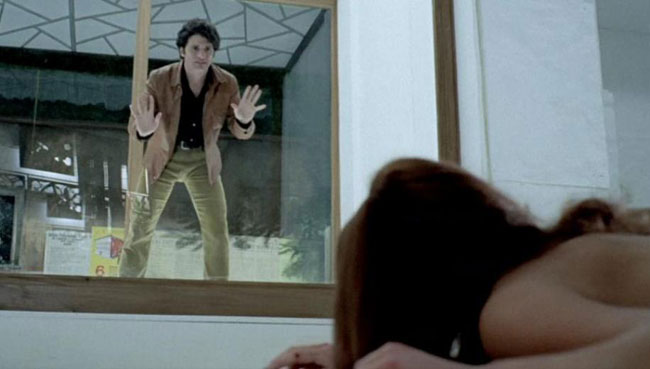
The set-piece that kicks off the film’s plot — an American novelist, Sam Dalmas (Tony Musante), trapped between two glass doors and forced to watch a beautiful woman bleeding on the floor in front of him — is one of the most enduring of the genre and a testament to Argento’s skill as a filmmaker, eking so much tension and visual interest out of a deceptively simple setup.
An eminently rewatchable film, I find myself regarding it more highly, and discovering new things to appreciate about it, every time I return to it, which is at least once a year.
There is a rumour, perpetuated by one of the film’s theatrical trailers, that, having seen The Bird With The Crystal Plumage, Alfred Hitchcock remarked “That Italian fellow is starting to make me nervous.” High praise indeed from the Master of Suspense, and richly deserved.
The Strange Vice Of Mrs. Wardh
Dir. Martino (1971)

Ask a giallo aficionado who is the undisputed queen of the genre, and I’d hazard a guess that most would reply “Edwige Fenech”. The striking Algerian beauty makes her giallo debut in this twisty (not to mention twisted) thriller, playing Julie Wardh, the wife of an Austrian diplomat, who is menaced and taunted by a sadistic former lover, who may or may not be the same black-gloved killer who is going around Vienna, murdering its young women.
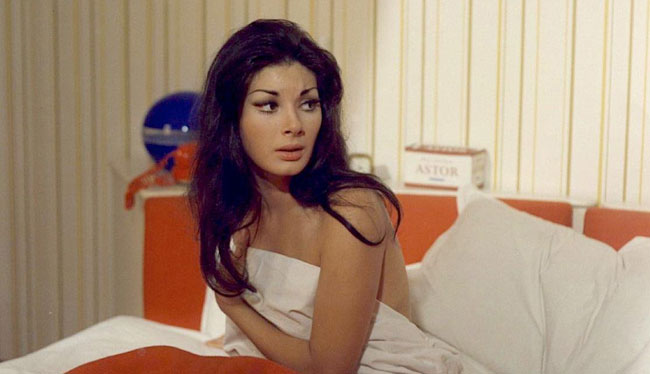
The film nails its colours to the mast when it opens with a quotation from Freud, and the psychosexual mind games which follow are appropriately warped. Another giallo mainstay and Fenech’s frequent on-screen partner, George Hilton, also appears, in a role he was to return to time and time again in the genre: that of the suave playboy love interest whose intentions towards the heroine may not be altogether pure. Ward may lack the sophistication of some of Dario Argento’s best work, but it remains a firm fan favourite and is arguably the most iconic of the “woman in peril” strand of the genre.
A Lizard In A Woman’s Skin
Dir. Fulci (1971)

Though most famous (or should that be notorious?) for his 1980s zombie films, the prolific Lucio Fulci directed films in virtually every genre, and his contributions to the giallo movement are arguably his most accomplished.
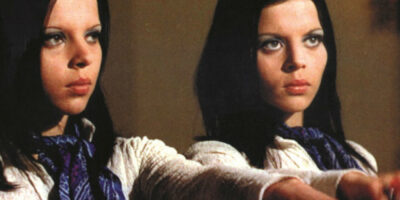
Little more than a purveyor of schlock to the uninitiated, Fulci’s gialli are the work of a skilled and meticulous filmmaker, and arguably none more so than this psychedelic thriller set in swinging London, in which a high society barrister’s wife, Carol Hammond (Florinda Bolkan), is accused of murdering her promiscuous neighbour — and the subject of her erotically charged nightmares — Julia Durer (Anita Strindberg).
Perhaps the movie’s most impressive aspect, and a testament to Fulci’s skill as a filmmaker, is the way in which it uses its restless, often handheld camerawork, Ennio Morricone’s jarring atonal score and its for-the-time explicit sexuality and violence to mirror Carol’s increasingly unstable state of mind, blurring the boundaries between fantasy and reality.
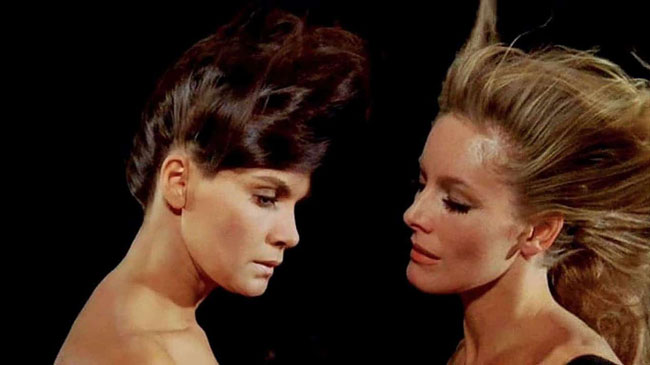
Carol’s erotically charged nightmares are a particular standout, conveying the conflicting feelings of desire and revulsion she feels towards her promiscuous neighbour, and hinting at the dichotomy that lies at the heart of the genre as a whole with regard to its attitude towards sexuality.
What Have You Done To Solange?
Dir. Dallamano (1972)

A friend of mine told me, after watching this opening instalment in Massimo Dallamano’s thematically linked “schoolgirls in peril” trilogy, that he wished he could dip his screen in Domestos to wash off the sleaze.
Set, like A Lizard In A Woman’s Skin, in early 70s London, Solange revolves around a thoroughly compromised schoolteacher, Enrico Rosseni (Fabio Testi), embroiled in an affair with one of the students at the prestigious all-girls school where he teaches.
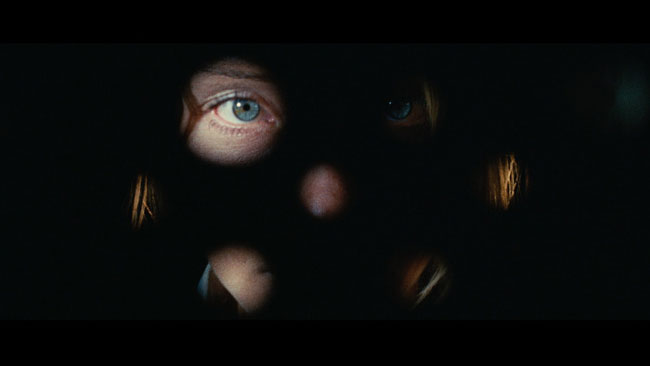
When his lover and a number of the other students turn up dead, Enrico soon finds himself fighting to clear his name, the key to the mystery being the answer to the question posed in the film’s title — just who was Solange, and what was done to her that could have provoked the current spate of killings?
Perhaps more so than any other giallo, Solange can be an uncomfortable film to watch, with its frequent and unabashed sexualisation of teenage girls, highly dubious morals and the killer’s deeply disturbing method of dispatching his victims.
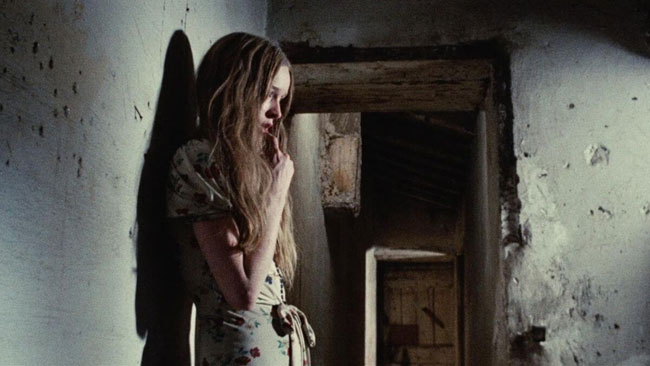
However, it’s also one of the most accomplished films in the genre, combining a cracking central mystery with brilliant camerawork, a haunting Ennio Morricone score and a surprisingly touching final frame.
Don’t Torture A Duckling
Dir. Fulci (1972)
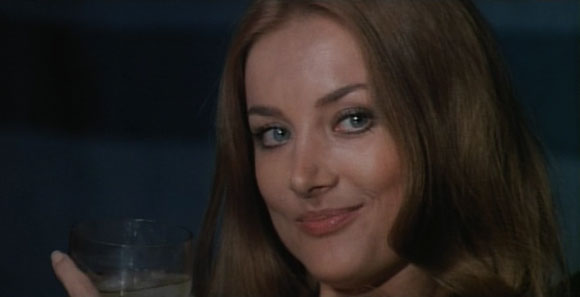
The giallo is primarily an urban and decidedly modern (from a 1970s perspective) genre, albeit with a few notable exceptions. One of these is Fulci’s 1972 trip into the rural south, which sees a rustic community gripped with paranoia as a killer preys on its male children, killing them while they’re on the cusp of adolescence.
Criticism of both the Catholic Church and religious superstition in general figure heavily in this bleak and often misanthropic tale, in which the two most sympathetic figures, and its de facto protagonists, are a ruthless big city journalist (Tomás Milián) and a recovering drug addict (Barbara Bouchet) whose predilections towards pubescent boys are not exactly subtle.
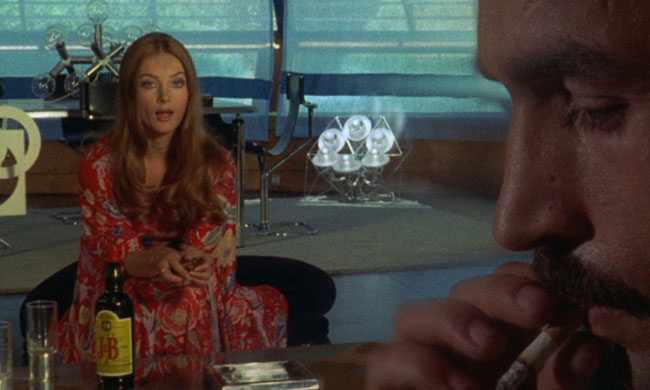
Duckling also features what may be the most brutal scene Fulci ever filmed (which takes some doing), in which the local “witch” Maciara (Florinda Bolkan), almost unrecognisable from her role in A Lizard In A Woman’s Skin) is cornered in a graveyard by some of the local men and chain-whipped to death.
The moment when, in her death throes, she crawls to the roadside seeking help, and is unnoticed (or ignored) by the commuters driving up the concrete road that slices through the tranquil countryside, is both tragic and unbelievably poignant.
Deep Red
Dir. Argento (1975)

Arguably the pinnacle of Dario Argento’s career and almost certainly the giallo’s finest moment, Deep Red was Argento’s triumphant return to the genre after a brief and unsuccessful foray into historical comedy with the ill-fated The Five Days of Milan.
While essentially a retelling of The Bird with the Crystal Plumage, this later film ups the ante in every respect. The kills are more brutal, the camerawork more audacious, the production design more grandiose and the gender politics more upfront.
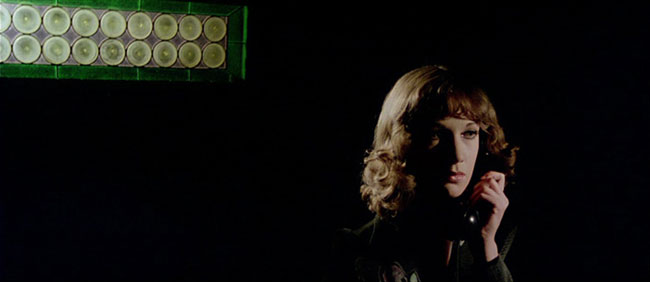
In a sort of uncredited reimagining of Blowup, David Hemmings plays a role not dissimilar to the one he inhabited in the Antonioni film — that of jazz pianist Marcus Daly, who witnesses the murder of his upstairs neighbour and becomes embroiled in the hunt for her killer after convincing himself that something about the murder scene didn’t quite fit.
Along the way, he teams up with journalist Gianna Brezzi (played by Argento’s on-off partner Daria Nicolodi), and the sparring between them is some of the wittiest and most sharply-observed Argento has ever committed to film. (The sight of Hemmings crying foul after losing a “battle of the sexes” arm-wrestling contest to Gianna, only to later grudgingly concede that women may have brute strength but that men have the brains, is too funny for words.)
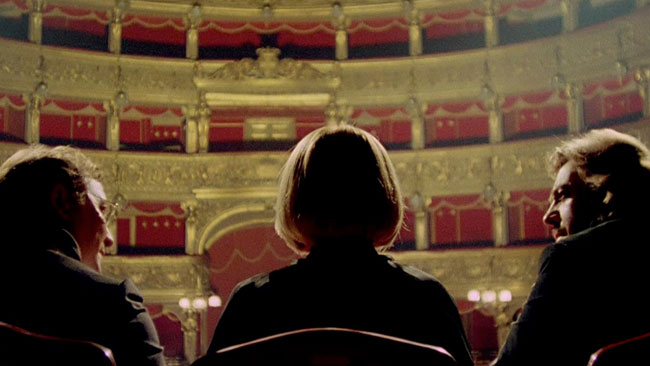
As the 70s waned, Argento became less interested in narrative and more obsessed with style for style’s sake. While this meant that his work in the next couple of decades was more of a mixed bag (before, in the twenty-first century, he seemingly gave up on style as well), Deep Red is a perfect melting pot of both style and substance — and a giallo that you don’t just watch, you experience.
The House With Laughing Windows
Dir. Avati (1976)

Zeder director Pupi Avati’s sole entry into the genre arrived at a time when the movement’s popularity had long since waned, but remains one of the most critically acclaimed gialli ever produced.
With its rural setting and strong overtures of Catholicism, the film bears certain resemblances to Fulci’s earlier Duckling, but is an altogether different and (some would argue) more restrained beast.
Lacking the genre’s penchant for brutal violence and baroque visuals, the film seems somehow to bridge the void that exists between the giallo and other more “respectable” filmmaking. (The fact that it’s one of the few gialli to have been released on DVD by a mainstream distributor, 20th Century Fox, further adds to this impression.)
While arguably not as “fun” as the other films featured in this list, The House with the Laughing Windows is undeniably the work of a skilled filmmaker, and its more restrained nature may make it an ideal starting point for those new to the genre.
Tenebrae
Dir. Argento (1982)

While, like Laughing Windows, Tenebrae may not be part of the main giallo boom, it is nonetheless essential viewing for anyone with more than a passing interest in the genre.
Based on an incident Dario Argento experienced involving an overly obsessive fan, this highly self-reflexive film follows a writer of murder novels, Peter Neal (Anthony Francoisa), who, while in Rome promoting his latest book, receives threatening messages and becomes embroiled in a series of murders, the victims found with pages of his book stuffed in their mouths.
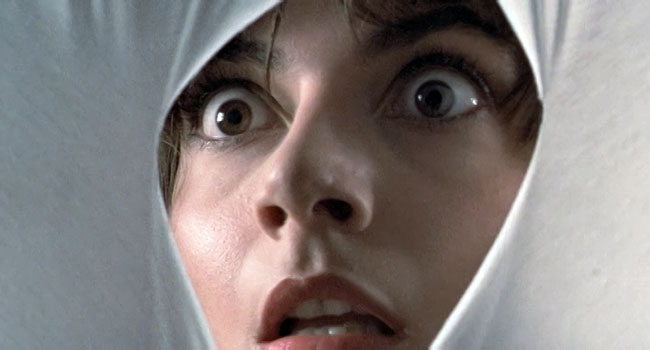
Tackling such issues as the perceived misogyny of the genre and the responsibility of the artist for how people respond to his work, Argento faces many of the long-standing criticisms of his work head-on and weaves his responses into another tight and impeccably constructed mystery, featuring a cavalcade of assorted kings and queens of Italian genre cinema — John Saxon, Daria Nicolodi, Giuliano Gemma… and the future Mrs. Silvio Berlusconi, Veronica Lario, whose brutal death was ordered to be stricken from all broadcasts of the film on Italian television by her new husband.
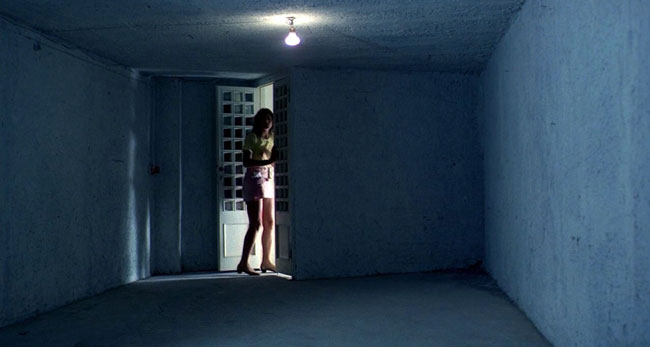
The fact that the majority of the film takes place under the glare of near-blinding light, contrary to what its title might imply (tenebre is Italian for “darkness”), means that this final entry in our brief overview of the giallo looks and feels like no other film in the genre.










Perhaps a genre I have a love-hate relationship with. I can’t put my finger on why because these pieces of Italian cinematic art ooze class despite a distinctly dark, sexual and violent tone. While the Americans were marveling in the grotesqueness of gore, the giallo auteurs were celebrating its artistic “beauty”. It feels like a contradiction in terms and yet it worked so brilliantly, perhaps because every frame looked like a piece of fine art. That the art framed a woman’s bosom or slice of human flesh made these film’s all the more alluring. It’s a genre that infuriatingly fascinates me. An illuminating read. Thanks Michael/Top 10 Films!
Very nice list, but only one question.
How could you not include “Bay Of Blood”??
The Girl Who Knew Too Much and The Bird With The Crystal Plumage are definitely the two people should start with when introducing themselves to giallo. I love this chronological “best of”, there are some very impressive selections. Deep Red is a favourite of mine.
Heart broken that you dont have Gates of Hell….Fulcis masterpiece.
Terrific article, Michael. I’ve been a fan of the genre ever since someone recommended me Argento’s fantasy-horror Suspiria. That prompted me to check out the rest of his work and discover the fascinating allure of gialli.
It’s interesting that the genre has been populated by directors who have spent much of their time working with similar stylistic freedom in horror. I suppose that balance between horror and giallo has a somewhat fine balance which has allowed Argento, Bava et al to move between such conventions quite seamlessly.
Of the films you’ve picked I’d say The Girl Who Knew Too Much and The Bird with the Crystal Plumage are the absolute must-sees for beginners. If I could add my own two-penny-worth I’d suggest people check out Neal’s recommendation above – Bay of Blood aka Twitch of the Death Nerve (perhaps one of the finest examples of giallo and horror coming together).
Many thanks for the comments so far, folks. I’m glad the article has been a hit. On the subject of omissions, Gates of Hell (a.k.a. City of the Living Dead) wasn’t up for consideration since I don’t consider it to be even remotely connected to the giallo movement. Bay of Blood is more of a fringe case, though again not an entirely comfortable fit for me as it deviates quite substantially from the traditional giallo narrative framework. That said, if I wanted to convince someone that the American slasher movie movement owes its entire existence to Mario Bava, it’s the film I would point them to.
@Michael, I totally understand what you are conveying here, but “Bay Of Blood” is completely a giallo film. Yes, I agree it did introduce America to Italian slasher crime films. Certainly influenced the Friday the 13th series and Sean Cunningham.
Excellent list, Sir.
From experience, I have found it best not to watch a beloved Giallo with women, as they all have a bloody 6th sense for when the killer in question is masquerading under the opposite gender or just smoke n’ mirrors in general.
When watching Bird with the Crystal Plumage, the woman I was playing it for remarked at the end: “I thought that was too thin to be [Spoiler Removed!]”
When playing Deep Red for another, she noted: “I thought I saw [Spoiler Removed!] in that [Spoiler Removed!]
When playing Tenebrae for my wife, she noted [Spoiler Removed!] at a crucial juncture.
Funnily enough, I refuse to play any more for her – this is the woman who figured out every twist in all episodes of Columbo when she saw them!
One I would recommend is What Have They Done to Your Daughters. It’s a pretty cool movie, and eases in the novices with the blend of poliziotteschi and the beloved yellow-covers. There is stuff in it which is still rather shocking today, especially given how much they crack down on certain imagery these days. I was rather chuffed to stamp my affection for it onto the movie by writing the copy/blurb/plot synopsis on the back of the Shameless release – I tried to make it as lusty as possible, to the point where I elected to put “machete” rather than “meat-cleaver” so as to lure the more casual buyer.
Awesome selection Micheal! I love giallo.
What Have You Done To Solange isn’t loved by everybody but it’s one of my faves. Great round-up of the best giallo.
Maria’s son Lamberto’s A Blade in the Dark is also worth checking out as one of Giallo’s last hurrahs.
Fair enough about GOH. And I agree that guys like Craven Carpenter and Cunningham were absolutely influenced by Bava. And your piece is really well done. Just wish GOH was on it.
No complaints at all with those choices. I would have swapped House with Laughing Windows for Eyeball. Not because the latter is the better film but more because I think it follows the template closer and Lenzi probably deserves a place on the list.
I know what you mean, and I was conscious of there not being any Lenzi films on the list. However, he’s comfortably my least favourite of all the “name” giallo directors. I was more sorry not to have room to include one of Aldo Lado’s two gialli.
Lenzi gets a hard time from some fans but I honestly think he is an excellent journeyman. Aldo Lado did some good stuff 🙂
Great list, essentially my top ten as well. Anyone who has not seen a giallo should start here!
So no Bazzoni then. But no complaints. It’s a good list. Especially interesting to see both the major “rural” Gialli (Don’t Torture a Duckling and House With The Windows…) making the grade.
The Fifth Cord is a beautiful-looking film with a great Franco Nero performance, but I suspect more of a completist’s film than one for the beginner. I like it a lot, but I’m not sure I’d have enjoyed it as much as I did if I came to it when I was new to the genre.
You needed more Sergio Martino titles. 🙂
Eh, one’s enough for me. My favourite Martino is actually All the Colours of the Dark, but Mrs. Wardh is the more iconic of the two. I mean, it basically established the template for the “frightened woman” giallo (albeit drawing heavily on the Carroll Baker films of the late 60s).
Nice list Michael!
Perfect list!
Good list, Michael!
God I still hate Solange!
In your case, it would therefore have been the perfect film to start with, as it would have sent you running screaming for the hills and you’d have been spared 6+ years of supervising a thesis on the damn things.
Michael forgot this one…unforgivable!!: https://www.youtube.com/watch?v=TAA6_JCX2qE
Come on now, I’m trying to introduce people to the giallo, not frighten them away!
In Fulci’s late career i like more “The devil’s honey” or “Voices from beyond” than “Murderock”..overall i tend to like more Argento’s controversial works than Fulci’s controversial works ha ha
I never could get on board with Murder Rock. It’s just a bad film with bad music, in my opinion.
The opening with these disco tracks are really something, for sure!
Fulci went downhill fast after Manhattan Baby (which is excellent and doesn’t get enough notice). But Murder Rock is the last of his films I can enjoy, quite easily, from start to finish. Cat in the Brain is probably Fulci’s nadir. It’s on the level of Mother of Tears or Dracula 3D for me.
I really like Murder Rock and, with a totally straight face, I think it is Fulci’s last really good movie. I prefer it to The New York Ripper (and Murder Rock is more or less a remake).
But with disco.
Very nice primer. The more giallo films I see the more difficult it is for me to narrow them down to a list of “favourites” but every film on this list is outstanding and I find myself itching to see each of them again. I always think one of the key elements of great giallo films is the way they immerse he viewer into an incredibly sensuous world. Nature is loud and pervasive (the wind is always louder in Italian horror films than in films from any other country). I also think they are remarkable for their tendency to celebrate architecture, fashion and art without ever appearing high minded or pretentious. This is what often sets them apart from American thrillers and British whodunnits.
It’s hard to fault this list. I was pleasantly surprised to see Tenebrae make the grade; I think it’s essential viewing for anyone interested in gialli, but it’s not a great starting point. A newcomer should watch most of the other films on the list first before coming to Tenebrae (and in my case falling in love with it).
Tenebrae was my first giallo, which is perhaps why I felt compelled to include it here. It’s actually one of the films I would drop if I was creating a personal Top 10 (I’d probably substitute it with Opera), but it’s such an excellent deconstruction of the genre that I felt it deserved a spot… albeit with the caveat that it probably shouldn’t be tackled until the viewer has at least a passing understanding of giallo conventions.
Tenebrae over Opera every time. The latter suffers from Argento’s post-Tenebrae desire to stick heavy rock over the kills. And the gore is occasionally artless.
Tenebrae is probably my favorite Argento. My favorite giallo? I haven’t a clue.
Favourite Argento gialli? “Phenomena.”…The Stendhal syndrome”…”Tenebre”…”Opera”….”Deep red”…”the bird with the crystal plumage”….”The Card Player”. Others gialli: “Stage fright”, “Don’t torture a duckling”, “Blood and black lace”, “the girl who knew too much”, “Almost Blue”, “The Case of the scorpion’s tail”, “The red queen kills seven times”…
Interesting. Tenebrae is next on my list. Perhaps I should watch some more Argento first?
Stagefright isn’t really a giallo. More an Italian slasher.
Great, informative article about a genre I thought I had no affinity for.
But then I remembered that when I was a kiddie (about 9), I somehow convinced my parents to let me go and see a double bill consisting of The Black Belly of the Taratuala and Weekend Murders which I thoroughly enjoyed.
@Wilsonbro: I always thought David Lynch ripped off Deep Red in the original movie-length TV pilot of Twin Peaks when spoiler’s mother saw spoiler in the spoiler during a flashback. Not sure if it was repeated in the series.
I’m glad Opera wasn’t on the list, although the opening credits with the raven are pretty funny ….
The Black Belly of the Tarantua – that’s one to add to my “watch” list. I do love these overly descriptive titles. The House with the Laughing Windows and Don’t Torture a Duckling are my favourites from Michael’s list but I’ve found some others like, for example, The Bloodsucker Leads to Dance!
Other brilliant ones:
Kill the Fatted Calf and Roast It
The Suspicious Death of a Minor
The Man with Icy Eyes
The Killer Is on the Phone – not seen this one – sounds like When A Stranger Calls
The Bloodstained Lawn (Riccardo Ghione)
Five Dolls for an August Moon (Mario Bava)
Forbidden Photos of a Lady Above Suspicion (Luciano Ercoli)
The Case of the Bloody Iris (Giuliano Carnimeo)
AND, surely the best:
No Thanks, Coffee Makes Me Nervous (Lodovico Gasparini)
I watched The Girl who knew too much yesterday after reading this list and thoroughly enjoyed it. It’s my first giallo. Very Hitchcockian with a fittingly stunning looking lead girl.
Good list. I’m not the biggest fan of giallo but Bava’s work is exceptional.
Try Fulci – he will literally blow your mind.
Just watched lizard in a woman’s skin – it was brilliant! Mind blowing.
Hi Michael and Top 10 Films – can you tell me what is the best way to watch a giallo film? I ask because of the dubbing process – should I watch with English subtitles with Italian audio or with the English dub. I’m a little confused because I would usually watch a foreign film in its original language with English subtitles but I noticed that with some of the giallo films it appears English was the spoken language on set and therefore the English dub seems more appropriate.
Many thanks in advance.
@Rach: I think it varies from film to film. The vast majority were indeed shot with English as the primary language spoken on set, though the fact that there is no “original” language as such means that there’s quite a bit of leeway. Basically, if the DVD features both English and Italian audio, I sample them both and go with whichever one I like best.
There are a few exceptions, of course. DEATH WALKS AT MIDNIGHT (one of my favourite of the more kitschy gialli) was clearly shot in Italian and plays much better in that language. And then you have DEEP RED, where the English dub of the full length version is incomplete and jumps back to Italian for scenes that weren’t included in the shorter cut of the film.
Just one final thought. I personally think Fulci is one of the best horror directors out there. Bava and Argento might be more well known, but for my money, Fulci is more polished. There are maybe five films of his that left me feeling sucker punched after watching them. I appreciate the other two, but they have nothing on Fulcci imo. I know Gates of Hell was included in this list, but the drill to the head scene in that film is one of the most brutal scenes of any film I can think of.
Thanks for writing a great article.
And thanks to everyone from around the world who has chimed in with their own top tens. There are lots of films from different countries that I must find now.
Lizard in a Woman’s Skin is messed up but I couldn’t take my eyes off it. I must check out some of these other Italian thrillers. Thanks for the recommendations.
I must try some of these giallo… They looking very interesting.
Great article. I’ve seen some Argento but I’m eager to check out some of the others.
I’ve seen 7 of those 10 giallos. Most recently What Have You Done to Solange. As you say, it’s definitely sleazy, but also has a well-told and suspenseful plot.
Great choise of movies.
Arguably Fulcis The Psychic is his best
and should replace Lizard
Well, I can’t find “like” button, so… LIKE…
I love THE GIRL WHO KNEW TOO MUCH, but the blu-ray you show in the image at the top is for a much inferior US film (from 1969) with the same name…starring Adam West!
Thanks Kevin. I’ve removed the image.
Great list! I’m very into Giallo right now.
A few I would add to your list (no particular order):
1) A Bay of Blood (AKA Twitch of the Death Nerve) (1971) – While still a giallo, this was the first proper slasher movie ever made. Several kills were later copied (although actually tamer) in the first few Friday 13th movies. Very high body count for a giallo (about 13) and the gore effects are amazing and still stand up today despite this movie having been made 50 years ago. As usual with Mario Bava, the cinematography is beautiful.
2) Your Vice is a Locked Room and Only I Have the Key (1972) – If that title doesn’t peak your interest, I don’t know what to tell ya. Directed by Sergio Martino, this is a pretty interesting an unconventional giallo. If you enjoyed “The Strange Vice of Mrs Wardh”, you’ll enjoy this.
3) The Red Queen Kills Seven Times (1972) – I see this one talked about less often than the gialli of the genres best known directors (Bava, Argento, Fulci, Martino) but it remains one of my all-time favourites.
4) Torso (1973) – great suspense in the third act and some very tense scenes.